



Several Iranian citizens and prominent political and civil activists have reported that their active mobile phone SIM cards were blocked without prior notice recently.
Upon inquiry with telecommunications providers, some learned that the blocks were ordered by the Islamic Republic's internet police, following orders from judicial and security authorities.
Many of the individuals had faced restrictions on social services due to receiving hijab-related text messages or having their social media activities monitored. Some political and civil activists believe that security agencies may be preparing legal cases against them.
"When my SIM card was first disconnected, I assumed it was time to pay the bill, and that I had overlooked it due to personal issues," recounted Rana, a woman living in Tehran. "After confirming I had no outstanding balance, I thought it must be a technical issue. Later, I called my husband, who works nearby, and asked if his phone had lost service. He said no. When my phone still had no signal by 2 PM, I visited the telecommunications office and was informed that the issue stemmed from a judicial order."
Rana, who had received numerous hijab-related warnings via text message over the past two years, realized her SIM card had been blocked due to her choice of clothing. "I’d heard about the confiscation of cars, but now they’re also targeting our access to basic services. For two years, the streets have felt like a battlefield for me and others like me.
"We’ve been denied access to cafes, restaurants, and transportation. We face challenges at every turn - whether we drive, take a taxi, or walk. Now they’re even blocking our phones and bank accounts. Life feels anything but normal, but I refuse to betray the sacrifices of people like Mahsa Amini and others."
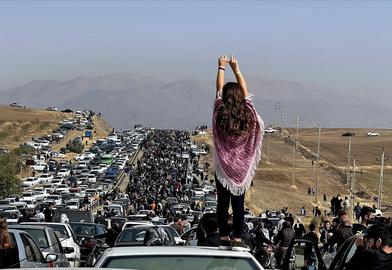
Similar incidents have been reported by other citizens or their relatives in recent days. Many believe this is part of an increasing wave of pressure, timed to coincide with the second anniversary of the Woman, Life, Freedom movement, aimed at building cases against political and civil activists.
Elaheh Khosravi, a former journalist, shared on her X account: "A friend's SIM card was disconnected, followed by a text with a number to call for more information. When they called, authorities said they would be summoned for their Instagram activity. They're starting early ahead of Mahsa's anniversary this Sunday."
Shahriar Shams, a student activist and former detainee from the recent nationwide protests, also took to X to describe a similar experience: "This morning I found out my SIM card was blocked. I have no idea why, but as long as the Islamic Republic exists, systematic harassment will never end."
In an interview with IranWire, Rana, the Tehran resident, explained that when she sought further clarification, she was directed to the Internet police. "My SIM card was blocked, and they told me to go to the judicial authorities. I went to the prosecutor's office, but there was no criminal case. Then they told me to go to the FATA [internet] police.
"When I arrived there, I was told it was due to driving with inappropriate clothing and posting images that violated Islamic norms on social media. My page is private, and the only thing on it are personal photos. But they had printed some of my images and added them to my file. In the end, I bought a new SIM card and abandoned the issue."
It appears that unusual punishments for those opposing the mandatory hijab - or individuals labeled as "norm breakers" by the government - go beyond SIM card blocking.
A citizen in southern Bushehr told IranWire about another example of these punitive measures: "I own a traditional clothing store and have held a business license for many years. But last year, they refused to renew my license because I hadn't complied with the mandatory hijab.
"I went everywhere seeking help but received no answers. Eventually, my brother obtained a license, and I now work under his name. Recently, they blocked my bank account. When I inquired, they said it was because of a hijab violation, and I wouldn’t be able to access my account until I paid the penalty."
Failing to track blocked SIM cards can have serious consequences for individuals involved in civic or political activities.
A source told IranWire: "Recently, the judiciary has begun blocking the SIM cards or closing the bank accounts of any activist or political figure they consider a threat, under the guise of legal action based on the judicial reform document."
Although smartphones still allow emergency or SOS calls in such situations, the exact impact on phones remains unclear, and there are no guarantees about what other limitations might follow.
According to the source, security agencies or the Ministry of Intelligence request the prosecutors to intervene. The prosecutors then instruct phone operators to block the active SIM cards.
"There are many such cases. Some people were targeted due to receiving hijab-related text messages, while others had been active on social media. Some are political and civil activists who responded to the killing of Mahsa Amini in 2022 and the protests. In several instances, even private social media pages, which had been inactive for a long time after the protests, were scrutinized, and users later discovered that their 2022 activities were documented in security files."
The source also highlighted growing concerns among activists about security agencies' access to their private social media accounts, conversations, and personal data: "Many people facing SIM card blocks rely on their phones to receive one-time passwords (OTPs) for banking or other services. These OTPs are not always protected by two-factor authentication, which means that security agencies can easily retrieve personal information. By blocking and reissuing the SIM card, they gain access to critical data, including password-reset SMS messages, which can then be used to build cases against them."
Moussa Barzin, IranWire's legal advisor, explains that the issuance of punishments, such as restricting social services for opponents of the mandatory hijab, has been happening for one or two years, though none of these actions involve formal criminal charges.
"There is no criminal case against these individuals," he notes. "Complaints are filed with the FATA [internet] Police or the Morality Police. These actions are 100 per cent illegal in the absence of any criminal charges.
"If a criminal complaint existed, the FATA police could block, for example, the Instagram page or the SIM card of a person, but only if relevant. For instance, if someone used Instagram for fraud or harassed others via phone, such measures would be legal."

Interested in writing for IranWire?
Share your stories.


comments