



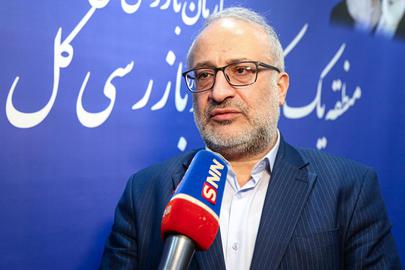
Tehran Province's Chief Inspector, Afshin Sohrabkhan, sparked a controversy last week when he announced a ban on all immigrants, both legal and illegal, from working in food production facilities and workshops. However, the policy is not new.
Several provinces have enforced a ban on immigrants, mainly Afghans, who have been working in food production for some time.
Some civil activists view the ban as racist, while others on social media have welcomed the policy.
Another group of critics focused on the term "legal" in Sohrabkhan's statement, arguing that while they understand the rationale behind restricting employment for illegal migrants, they ask why legal immigrants are also barred from food production work.
Sohrabkhan warned that if inspectors found legal or illegal immigrants working, the produced goods would be considered substandard and unsanitary.
A Decade-Long Struggle Despite Legal Status in Iran
Fifteen years ago, Hadi Sarmad boarded a pickup truck and migrated from Pakistan to Iran under the cover of night. For the first five years, he worked illegally on potato farms around Kermanshah for meager wages.
After securing a residency permit, he moved to Kashan, a city with a growing demand for immigrant labor. There, he first found work as a street vendor. Ten years ago, he landed a job in the kitchen of a traditional restaurant.
Hadi explains that while the Iranian government does not prohibit immigrants from working in arduous or dangerous occupations that Iranians are unwilling to undertake, such as construction, its policies limit Afghans' employment options to these demanding and often low-paying roles.
"Most of my friends work in tough jobs for minimal wages because they are denied access to easier positions with higher pay," he laments. "Over the past 15 years, I’ve worked various jobs, from street vending to laboring in a marble quarry near Najafabad. For the last decade, I've been employed in a traditional restaurant. My employer is happy with me. We have become like family and trust each other."
Despite working tirelessly, he could not rent a shop to start his own fruit business with his savings due to a ban on renting shops to migrants. "After residing in Iran for fifteen years, ten of which were spent as a legal resident, and considering that this country has become my home, why am I not allowed to start a simple business?" he questions.
"For the past few months, every real estate agent I've approached has refused to rent to me when they discover I am Afghan. Even after ten years of living here, I am worried about losing my job."
Hadi believes this law is fascist. "At least they should have said that only illegal migrants are banned from working in the food industry," he argues. "If health monitoring is a concern, inspectors could easily supervise the work of legal Afghan workers, just as they do with other workers."
Iran Tightens Restrictions on Migrant Workers
The Iranian government's crackdown on foreign nationals working in the food industry has intensified in recent months.
In Kashan, the head of the Chamber of Guilds warned businesses that employing foreign workers, whether legal or illegal, in food production and distribution would result in legal prosecution. Additionally, property rental contracts with both legal and illegal migrants were prohibited.
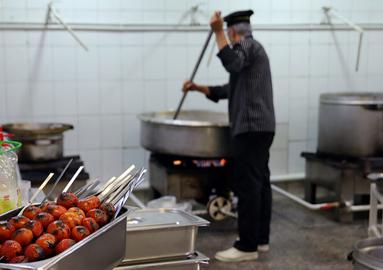
Earlier, the authorities ordered restaurants, banquet halls, food vendors, kitchens, kebab shops, and all food-related businesses from employing foreign workers. These restrictions are not limited to Kashan.
In April, the Director-General of the Bureau of Foreign Citizens and Immigrants Affairs in Alborz Province prohibited rental agreements with illegal migrants, including residential, commercial, and industrial buildings.
Fight for Survival
Fatemeh, a legal refugee from Zabol in Sistan and Baluchistan, migrated to Mahmoudabad Industrial Town near Isfahan eight years ago with her husband and three young children. Her husband found work in a stone-cutting workshop, but their family faced harsh living conditions in a small room without water or electricity.
Two years later, they rented a larger room in a garden in exchange for helping with the gardening. However, their peace was shattered when a truck struck and killed Fatemeh's husband one night, leaving her to raise their three young children alone.
A local benefactor encouraged Fatemeh to start preparing and packaging vegetables for sale, which became her only source of income. However, she recently lost her job. "I've been under a lot of stress," Fatemeh said.
"I've lost my job, and my employer is forced to shut down the business. They've been warned that inspectors will come, and there will be heavy fines if they find Afghan workers. I've considered working as a house cleaner but don't know what to do with my children."
Six months ago, the Isfahan Governor's Office banned Afghan food production, packaging, and sales employment. Since employers face severe consequences for violations, even underground work is no longer an option. This has left many migrant workers like Fatemeh facing economic hardship and uncertainty.
These restrictions have existed for over a year in cities like Sirjan, Kerman, and Bandar Ganaveh.
Life on the Margins
Ahmad Nabi, a migrant worker in Shush City, has done various arduous jobs, including laboring, plastering, sewage work, and mushroom farming. Due to breathing issues, he recently started selling pre-packaged herbs using a wooden cart.
Unaware of the new laws restricting migrant workers in the food industry, Ahmad continues to chop herbs at night and sell them during the day for 30,000 tomans [less than half a dollar per kilogram]. Ahmad says that people still enthusiastically buy his herbs.
Ahmad's friend suggested investing 100 million tomans to extend his residency and obtain a health card. However, Ahmad is unaware that his livelihood could still be threatened even with a residency card.
Small Businesses Feel the Pinch
Some business owners believe these stringent laws could have unintended consequences, jeopardizing certain industries and hindering economic growth.
Behzad Mohammad Hasani, who runs a concrete products workshop in Behbahan Industrial Town, warns that the law will fail. "Hiring Iranian workers increases production costs," he explains.
He adds, "Small business owners cannot afford to hire demanding Iranian workers, so Afghans make up a large portion of the workforce in all production sectors in this small industrial town. Enforcing such laws might halt the operations of small producers."
What Do Supporters of the Ban Say?
Advocates for stricter measures against Afghan immigrants argue that their presence in the Iranian labor market has displaced unemployed Iranians and increased the risk of food contamination due to the unregulated nature of their work.
Rafi, a local business owner in Robat Karim and an opponent of Afghan immigration who requested anonymity, recounted an incident involving a bag of nuts sold to him by an undocumented Afghan worker, which contained a dead cockroach.
"This is not surprising. Just look at the living conditions of some Afghan workers on the outskirts of Robat Karim, and you'll see filth everywhere," he claims.
"Many lack access to piped water, and their living and working conditions are unsanitary. They live in large groups of 30 to 40 people in houses without proper sanitation. Under these conditions, whether you are Iranian or Afghan, it doesn't matter. When hygiene is not maintained, and thorough health inspections are not conducted, the risk of disease and food product contamination increases."
Rafi cited a previous statement by the head of the tuberculosis department at the Pastor Institute in Tehran, who identified undocumented Afghan migrants as a major contributor to the rise in tuberculosis cases in Iran.
Azadeh Mokhtari, a reporter for the Rokna website, echoed these concerns. He wrote, "The widespread presence of foreign nationals, particularly undocumented ones, in food production workshops, pose serious security and health threats to society."
However, the question remains: Can unsanitary behavior by workers of any nationality pose a health threat to society?

Interested in writing for IranWire?
Share your stories.



comments