



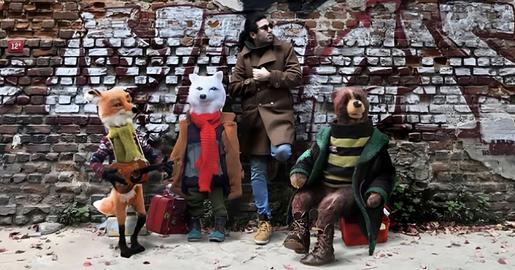

The art of Iran’s puppet master comes to life in a small corner of Rasht, where puppets with unnervingly human expressions seem to gaze back at their creator.
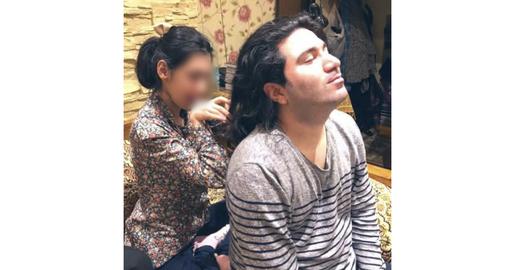
This is the world of Ali Tajaddod – illustrator, animator, and puppet master – known to his followers as "Monsieur Tajino."
Born in 1981, during a time of national upheaval, Tajaddod’s childhood was shaped by an almost obsessive drive to create alternative realities. While other children played with toys, young Ali staged theatrical productions using nothing but clay and imagination.
"With clay, I'd make tea; with bricks, I'd create spices," he recalls, his voice echoing the memories of his childhood.
“Then, I'd invite the grown-ups to my parties so they could enjoy the tea and food I’d made.”
Even then, he wasn’t just playing; he was constructing entire worlds, breathing life into the inanimate.
The name "Monsieur" clings to him like a second skin, a gift from his father, who saw a reflection of French cinema icon Alain Delon in his son’s features. Later, inspired by another silver screen legend, Al Pacino, Tajaddod would adopt the moniker “Al Tajino.”
His students reject the traditional honorific "master" and call him "Monsieur Tajino" instead.
However, beneath the whimsical nature of his puppets lies a deeper darkness, one that only emerged years later through the harrowing revelations on the "Aan (That)" podcast.
There, under the simple name "Ali," Tajaddod shared the violence and trauma that had shaped his life - experiences that perhaps explain the authenticity in his creations' eyes.
His puppets don’t just look alive; they look like they have lived.
"Many people tell me the puppets I make look as though they're alive," he says. "Sometimes, even I believe it."
This lifelike quality comes from years of studying human expressions, capturing not only movements but also the emotions beneath them.
"It was always important to me to understand which facial muscles contribute to a smile and how they move."
But perhaps more crucial was his understanding of what lies behind those smiles - the joy, the pain, the unspoken stories.
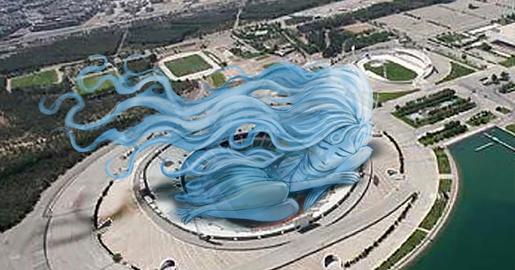
This profound empathy came to a head in 2019 when Sahar Khodayari, the "Blue Girl," set herself ablaze after being arrested for attempting to enter Azadi Stadium.
Tajaddod’s response was a piece of art: an illustration of Khodayari’s spirit, her hair flowing free above the stadium that had denied her entry.
His words accompanied the artwork: "Your soul will forever be free and unbound in that Azadi Stadium, dear girl, while we, a generation indifferent to the fact that our daughters burned themselves alive for their most basic human rights, stood by, went to the stadium, watched the games, and played on. I will never sit and watch football, even on a television, again."
Monsieur Tajino recalls that, many years ago, even before he could read or write, he would narrate the stories of books based on their illustrations.
“I remember my family admiring me for accurately grasping the story just from the pictures. Now that I’m an illustrator, I realize this was the skill of the book’s illustrator. The images didn’t narrate the story verbatim but complemented its understanding.”
Monsieur Tajino’s professional journey began as a cartoonist. "Like many cartoonists, I started with Tanz o Caricature magazine, edited by Javad Alizadeh. I kept drawing and submitting my work until one day, I saw my caricature published in the magazine.”
Seeing his name in the magazine thrilled him more than seeing it in the newspaper announcing his university acceptance.
“People found it strange that I wasn’t overly excited about getting into college. The truth is, I had already experienced the thrill of seeing my name in print multiple times in the magazine.”
Later, Monsieur Tajino began earning money from his cartoons.
“I made good money. We grew up in a world without smartphones or AI. I created simple animations that came to life when kids quickly flipped through their notebooks. The heroes in these animations were the kids themselves, which delighted them. I made two to three times my weekly allowance from my father just by crafting and drawing these animations.”
As his recognition grew and he started earning well from magazines, Tajaddod realized his talent could become his primary source of income.
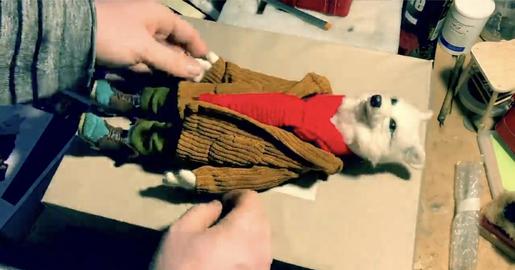
By 2021, his world transformed when he began making puppets using synthetic fibers and the felting technique known as keche - done with felting needles.
“This was something I’d often do as a child - making puppets as a hobby. Like Nell, who gifted dolls wherever she went, I used to create puppets from mostly useless materials. One day, while browsing DigiKala, I came across felting needles. I ordered them, bought some fibers, and the moment they arrived, I made a cat.”
He explains that creating puppets, with all their details, gives him a sense of being a creator: “From nothingness, suddenly a human, an animal, or a character comes to life.”
“I remember once making a puppet of my wife’s late father as a birthday gift for her. Late at night, as I worked on the puppet, it became so lifelike that I got scared. It felt like something from my hands had transferred into the puppet.”
Keche puppets can be crafted anywhere, without the need for electricity or advanced technology - just fibers, colors, needles, and creative passion.
“Every puppet has a story. Once the story forms in my mind, I sketch the characters in my notebook. Then, I design their clothing, create a metal body for them, and finally cover the structure with felt fibers.”
Monsieur Tajino makes all the clothes and accessories for his puppets himself.
“I believe in a sustainable lifestyle, so I use natural or recycled materials. I often work with leftover fabric from factories, scrap metal, and discarded wood."
One of Monsieur Tajino’s most famous creations is the White Wolf, a puppet accompanying him everywhere. The White Wolf’s story captures both real and imagined characters that have shaped his life.
“I had a fear of dogs as a child. In my teens, our family moved to a quiet, remote area where people often abandoned old or unwanted dogs.
"One cold, dark night, as I returned home in the last taxi from town, I saw a massive white dog. It was clear it wasn’t a stray. At the time, I was in a deep depression and felt utterly alone. The dog walked parallel to me on the other side of the road. I told myself, ‘I have no problem with you,’ because I’d heard that dogs can read minds.”
When he got home, his mother asked him to take out the trash.
“I went to the parking area and froze - the dog was standing just two meters away. It was as if a Native American spirit from my childhood imagination had come to protect me."
"Overwhelmed with fear, I knelt down. The dog came over and rested its head on my shoulder. I had never touched a dog before that day. For a few minutes, I held its head as it rested on my shoulder. Then, I let go, and it left. No one in the neighborhood ever saw it again.”
He named the mysterious dog Diefenbaker after the White Wolf in the TV series Due South, and now it’s one of his most iconic puppet characters.
Monsieur Tajino had a difficult childhood marked by violence.
“The person who caused me so much harm in my childhood now hurts me in other ways. But throughout the years, my dreams have saved me, making life bearable and even sweet. They turned the bitterness of life into something beautiful.”
Monsieur Tajino is the father of a daughter named Shahrzad, who has cerebral palsy. From her early months, Shahrzad has lived with this condition, and he has cared for her with love.
“When I think of the future, I always ask myself, ‘What will happen to Shahrzad if I die?’ That’s why I selfishly hope that if Shahrzad is to live 100 years, I’ll live 100 years and one day. The thought of what might happen to her after me is unbearable. Every decision my wife and I make comes down to one terrifying conclusion: we must not get sick or be hospitalized because Shahrzad needs us.”
Does enduring so much hardship mean life has ended? Monsieur responds, “No, I’ve accepted that no great miracle will happen, and this is it. I love my home and family."
"I adore my wife and daughter. Even though these days are tough, I find refuge in the scent of home and the presence of my loved ones. I make puppets, paint, and earn a living from it. What could be more beautiful? What’s better than loving the work you do?”

Interested in writing for IranWire?
Share your stories.



comments