



Across Iran, thousands are losing their life savings chasing a simple promise: finding love online, approved by clerics and guaranteed safe by matchmakers.
The truth, however, is very different. Many victims realize too late that they’ve been trapped by a sophisticated scam network.
Iran’s Cyber Police chief has confirmed that most matchmaking and temporary marriage websites are illegal and primarily set up to deceive users.
Still, these sites continue to grow. Their operators grow rich while victims remain silent, too "ashamed" to report scams that could expose their private lives.
As state policies on marriage and family falter, scammers have stepped in, exploiting religion, tradition, and people’s desperation for profit.
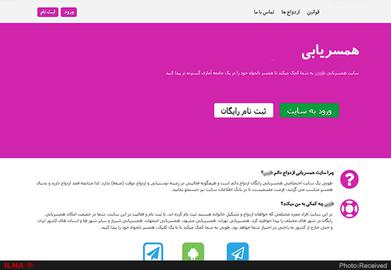
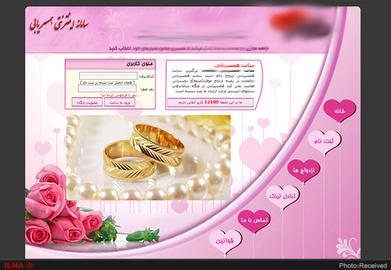
The websites are cleverly branded, with names like "Hello," "Peyvande Delha" (Bond of Hearts), and "Hamdam" (Companion) - names that suggest love, trust, and faith.
They look like legitimate dating sites, with polished designs and detailed forms that ask about education, finances, and religious beliefs.
“There’s careful thought and planning behind this work,” explains Mohammad Hassan, a young man from Kerman whose experience with these platforms left him both poorer and wiser.
The sites he used were highly sophisticated operations, complete with customer service representatives, payment systems, and elaborate verification processes designed to create an illusion of legitimacy.
It all starts normally. Users create profiles, upload photos, and browse for matches - just like on any dating site.
But once someone shows real interest, the trap is sprung. Suddenly, users are asked to pay introduction fees, upfront dowries, and security deposits.
Each payment may seem small on its own, but together, they amount to severe financial losses.
The truth became clear for Mohammad Hassan during his first and only in-person meeting. The woman who had claimed to be 26 looked closer to 40.
The photos that had drawn him to her profile bore little resemblance to reality. The promises of verified identities and guaranteed introductions proved hollow.
“The bottom line is that almost everyone gets scammed because the photos are mostly fake,” he said. “You have to transfer the dowry set for the woman you choose before the first meeting. These sites operate comfortably knowing most people don’t file complaints because of social stigma.”
This reluctance to report lies at the heart of the fraud industry’s success.
In a society where temporary marriages and casual relationships carry a significant stigma, victims often choose silence over justice.
The fraudsters count on this, building their business models around the certainty that “shame” will shield them from prosecution.
“You do the math,” says Reza, a mobile phone seller in Tehran. “If the business owner traps ten customers like me each day, and the amounts are small, nobody bothers chasing the money.”
But the financial loss is only part of the harm. The real damage runs deeper to "people’s dignity."
Using personal details such as names, ID numbers, addresses, and phone numbers, scammers often blackmail victims or publicly shame them.
Some report having their personal information and photos shared in public Telegram groups without consent.
Others face ongoing blackmail threats or are directed to fake payment portals that wipe out their bank accounts entirely.
The fraud ecosystem has evolved from simple romance scams into a full-scale assault on privacy, dignity, and financial security.
“There are people on these sites who are part of organized crime groups,” warns Mohammad Hassan.
“They’re here to defraud. Some are involved in trafficking women and girls or pushing business promotions. There's no oversight of their performance, either. No matter how many times you report them, their profiles don’t get taken down.”
The persistence of these scams highlights the Iranian government’s contradictory approach to internet regulation.
While authorities claim to rigorously monitor online activity and frequently announce crackdowns on illegal sites, the matchmaking fraud industry continues to thrive with apparent impunity.
Vahid Majid, head of Iran’s Cyber Police, has publicly claimed that law enforcement “continuously and decisively deals with illegal sites and channels in the field of temporary matchmaking and also the sale of immoral items.”
He insists that police identify and prosecute violators even without formal complaints.
But the situation on the ground tells a different story. Fraudulent matchmaking services are widely advertised on social media, and fake websites often operate for months or even years without being shut down.
The regulatory confusion extends to legitimate services as well. In 2020, officials claimed there was only one government-approved matchmaking website. By 2023, that number had grown to 33 licensed centers operating in 15 provinces.
Masoud Pezeshkian’s administration has tasked the Ministry of Sports and Youth with issuing matchmaking licenses, but the criteria and oversight mechanisms remain unclear.
The scam network thrives on social media, especially Telegram, where ads spread rapidly. A single message to a matchmaking channel can result in users being added to dozens of similar groups.
The Islamic Development Organization claims that advertising requires official licensing, but investigations show this rule is rarely enforced.
Channel operators openly admit that advertising restrictions are largely symbolic, having little effect on their ability to promote fraudulent services.
This regulatory vacuum has created ideal conditions for scammers to operate with near-complete impunity while victims suffer in silence.
Social media, government inaction, and victim silence have transformed matchmaking scams from isolated incidents into a booming industry.
Experts say what’s most troubling is how these scams prey on genuine human needs in a society where unmarried men and women can hardly interact.
Strict social norms in the Islamic Republic have left many desperate for safe, socially acceptable ways to meet partners, making them easy targets for fake, faith-based promises.
Mohsen, a 29-year-old who joined matchmaking channels out of curiosity, says, “Everything about these channels is fake.”
He adds, “But I’m glad when those who think they can have sex by reading two Arabic words get scammed.”
Even non-religious Iranians find themselves drawn to these platforms, thinking they offer easier and less complicated paths to relationships than traditional dating apps.
Dating apps, despite their risks, operate on the principles of direct communication and personal accountability. Users understand from the outset that they are responsible for their own safety and choices.
Matchmaking sites, by contrast, offer a false sense of security and official approval, making users trust them too easily. Their claims of religious endorsement only heighten that vulnerability.

Interested in writing for IranWire?
Share your stories.



comments