



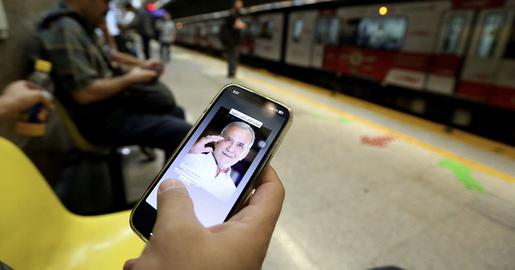
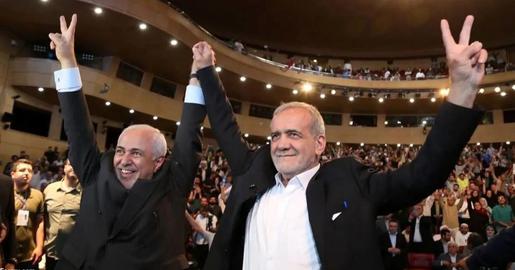
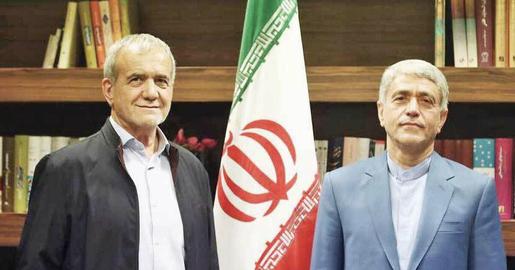
The second round of Iran's presidential election was held on Friday and pro-reform Masoud Pezeshkian succeeded in winning the majority of votes and the presidency of Iran.
What do we know about his possible cabinet and short-term changes?
According to the official report, the level of participation in the runoff phase of the election increased by about 10 per cent compared to the first phase, reaching nearly 50 per cent.
The total number of votes was 35,530,000, which is slightly more than in previous presidential elections.
Masoud Pezeshkian became the president with 16,384,000 votes, while Saeed Jalili won 13,538,000 votes.
The increase in voter turnout in the second phase was unprecedented, as typically participation in the second phase is lower than in the first.
The polarization of the elections, with people choosing between the Reform Front and the Islamic Revolution Front, was the main reason for the increased participation.
By electing Masoud Pezeshkian, the people showed they did not want to keep power with the representatives of the radical Islamic Revolution Front.
However, a significant portion of Iranian society boycotted the elections, signaling their opposition to the current political structure and policies and their desire for fundamental change in Iran's political system.
With the announcement of Masoud Pezeshkian's victory, attention is now focused on his cabinet and potential short-term changes in Iran's political, economic, and social environment.
Reviewing Pezeshkian's statements, interviews, and election speeches, he has emphasized putting aside domestic differences and engaging in dialogue, inclusive governance beyond one faction, representing the voiceless, and addressing the demands of the 60 per cent who boycotted the elections.
The presence of individuals from various political factions, including reformists, conservatives, and moderates, in his election campaign, suggests that Pezeshkian's cabinet may be one of "National Unity or National Reconciliation."
However, since Pezeshkian was the exclusive candidate of the Reform Front, the main actors in his election headquarters were reformists, indicating that the core of his cabinet would likely be composed of reformists and moderates.
One of Pezeshkian's objections to Hassan Rouhani's cabinet was its overly political nature, so it can be expected that the main figures in his cabinet will be less political and more expert-oriented.
Considering the importance of the role of the leader of the Islamic Republic in appointing cabinet members, it is possible to speculate that the following individuals might form Pezeshkian's cabinet.
Foreign Policy
The brightest aspect of Masoud Pezeshkian's cabinet is expected to be in the field of foreign policy, where former foreign minister Mohammad Javad Zarif played a significant role in his election campaign.
Zarif's influence was crucial to Pezeshkian's victory.
During the early days of the election campaigns, Pezeshkian responded to a question about including someone like Zarif in his cabinet by stating, "Experts should be appointed to be in the cabinet," indicating his strong trust in Zarif's capabilities.
Although Javad Zarif might not personally want to return to the Ministry of Foreign Affairs, the foreign minister will likely be chosen based on his recommendation.
Possible candidates include:
- Mohammad Sadr: Deputy Foreign Minister during Mohammad Khatami's government
- Abbas Araghchi: Deputy Foreign Minister during Rouhani's government
- Ali Akbar Salehi: Foreign Minister during Ahmadinejad's government
In this context, Javad Zarif could serve as an adviser to Pezeshkian's administration.
Economic and Energy Sectors
The economic team is a critical part of Masoud Pezeshkian's cabinet, encompassing key ministries such as Economy and Finance, Roads, Housing and Urban Development, Agriculture, the Central Bank, and the Management and Planning Organization.
While specific appointments are not yet clear, the leadership of the economic team will likely be spearheaded by Ali Tayebnia, the former Minister of Economy under Hassan Rouhani's administration.
Key advisers and potential appointments include:
- Hossein Abdeh Tabrizi: One of Pezeshkian's economic advisers.
- Pirooz Hanachi: The former mayor of Tehran, is considered a serious candidate for the Ministry of Roads, Housing, and Urban Development.
The Ministries of Oil and Energy are crucial for the energy sector.
Possible candidates include, Hamid Chitchian.Pezeshkian supported Chitchian's tenure and considered him a successful minister when Rouhani removed him from the cabinet.
Social and Cultural Sectors
One of the critical challenges for Masoud Pezeshkian's administration will be tackling poverty, social harms, and the issues within the country's health and education systems.
Success or failure in this area could define his government's overall effectiveness.
Ahmad Meydari is expected to lead the Ministry of Labor, Cooperation, and Social Welfare.
Pezeshkian is likely to appoint women to key positions, potentially in the Ministries of Health and Education.
This would address his previous criticism of Hassan Rouhani for not employing women in ministerial roles.
Cultural Sector
The Ministry of Culture and Islamic Guidance will also be a significant area of focus.
Possible candidates for this ministry include:
- Hossein Entezami: Former Deputy Minister of Culture.
- Ahmad Masjid Jamei: Former Minister of Culture during Khatami's government.
- Reza Salehi Amiri: Former Minister of Culture during Rouhani's government.
- Ali Motahari: Former Vice Speaker of the Parliament.
Intelligence, Communication, and Security
The prominent role of Mohammad Javad Azari Jahromi in Masoud Pezeshkian's election campaign indicates a possible return to the Ministry of Communications and Information Technology.
However, if he does not return to this ministry, other significant roles for him in the cabinet might include, Ministry of Sports and Youth, Head of the Office or Secretary of the Supreme Council of Cyberspace
Despite past opposition to Azari Jahromi in Rouhani's government due to a lack of experience, his proven track record today may have changed perceptions.
Potential candidates for key positions in intelligence, justice, and interior ministries include:
- Mahmoud Alavi: Minister of Intelligence in Rouhani's government
- Ali Younisi: Minister of Intelligence in Khatami's government
- Majid Ansari: Parliamentary deputy under Khatami and Rouhani
- Mohsen Esmaili: Former member of the Assembly of Experts
- Mostafa Pourmohammadi: Minister of Interior in Ahmadinejad's government
Pezeshkian is expected to promote diversity and inclusiveness in his cabinet, with the following initiatives:
Appointing a woman as a minister in addition to having a women's deputy in the cabinet, including a Sunni representative, despite resistance to Sunni management roles in the government, choosing a minister from Iranian ethnic groups, ensuring representation for those who boycotted the elections, potentially through roles like the Ministry of Sports and Youth, Vice President for Women's Affairs, Vice President for Science and Technology, or as a government spokesperson.
What to Expect in the First 100 Days
The arrival of the Pezeshkian government brings immediate changes and expectations, especially as it shifts from the previous administration's policies.
A pivotal focus lies in reshaping Iran's foreign policy, emphasizing engagement with Europe and the United States to potentially revive the 2015 nuclear deal.
This shift, including the return of Javad Zarif's diplomatic team, aims to prevent Iran's nuclear case from escalating to the UN Security Council.
Domestically, these foreign policy adjustments are likely to stabilize currency markets.
Yet, challenges persist within society, particularly among supporters of the Woman, Life, Freedom movement, and electoral dynamics among reformers.
How Pezeshkian addresses these issues will significantly impact societal cohesion.
Over the next hundred days, Pezeshkian's top priority should be restoring public trust and rejuvenating hope, essential for tackling Iran's complex societal issues.
Achieving this requires fostering trust, both domestically and through a policy of international engagement and tolerance.
Immediate economic changes may include bolstering workers' salaries to match inflation and household needs, alongside easing online restrictions.
Additionally, anticipated legislative actions encompass revisiting controversial bills, like the hijab and chastity bill, and addressing coercive practices against women and girls by law enforcement.
Furthermore, organizational changes within the government bureaucracy are anticipated, with a shift towards more moderate leadership, sidelining radical fundamentalist elements.
Interested in writing for IranWire?
Share your stories.


comments