



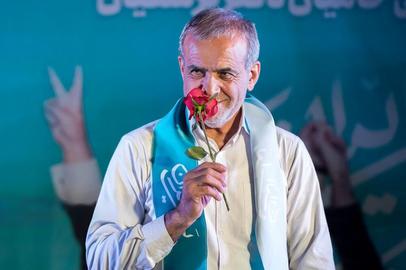
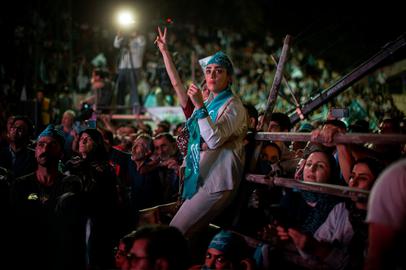
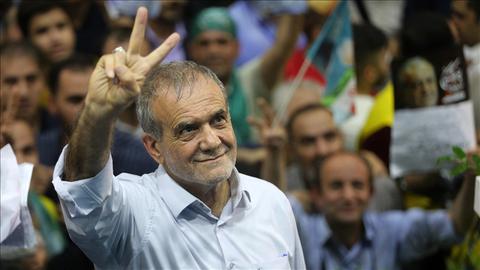
As Masoud Pezeshkian prepares to transition from an MP to the President of Iran, he faces a landscape riddled with complex and urgent challenges.
He will soon have to address serious issues that he has implicitly pledged to tackle, particularly regarding protecting citizens' rights.
Hours after his victory in Iran's presidential election, political figures began discussing the significant problems awaiting him.
The primary issue, as in the past, is the lack of authority in many promised areas.
The most pressing concern is the economic situation, especially the energy issue, which has the potential to create crises similar to those in November 2019.
To resolve these problems, Pezeshkian will need to reduce tensions in foreign policy. The ongoing conflicts in Ukraine and Gaza have complicated the global landscape and made foreign policy conditions more challenging.
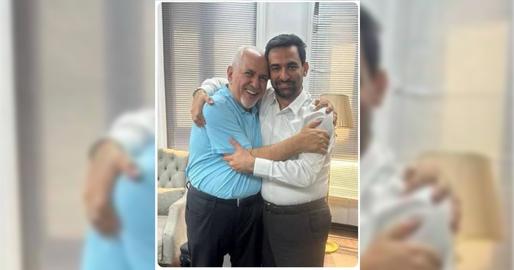
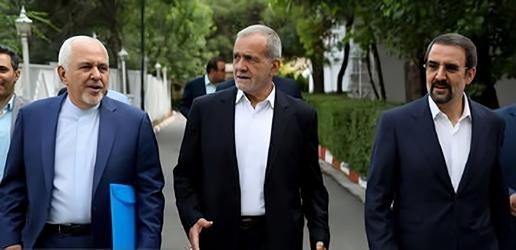
The presence of two members of Hassan Rouhani's government in his election campaigns suggests a possible direction for Pezeshkian's administration.
However, integrating these two figures - Mohammad Javad Zarif and Mohammad Javad Azari Jahromi - into his government may prove difficult.
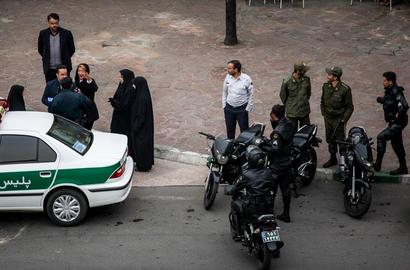
Additionally, issues such as the Morality Police and internet filtering represent potential points of conflict with the power institutions Pezeshkian will need to navigate.
The Cabinet
The first challenge that presents itself the day after the election is the selection of cabinet members.
Hours after his victory, speculations about Pezeshkian's cabinet started.
He faces difficulties in both finding efficient and loyal personnel, as well as gaining the approval of the Supreme Leader of the Islamic Republic and obtaining a vote of confidence from parliament.
Ali Abdul Alizadeh, head of Pezeshkian's campaign, is a potential candidate for the position of First Vice President, but he may lack the physical stamina required for the role.
Additionally, appointing figures from the administrations of Mohammad Khatami and Hassan Rouhani, such as Bijan Zanganeh and Abbas Akhondi, to significant positions could be contentious.
Pezeshkian will also need to secure the approval of the Supreme Leader for specific ministerial positions, including those of Intelligence, Foreign Affairs, Science, and Interior.
Mohammad Javad Zarif has expressed that he has no desire to become a minister again, and it is likely that parliament would not vote for him even if he were nominated.
Potential replacements for Zarif include figures like Abbas Araghchi or Mehdi Sanai.
However, finding a cleric who is both close to Pezeshkian and approved by Khamenei for the Ministry of Intelligence is a formidable task.
Mostafa Pourmohammadi, once a deputy in the Ministry of Intelligence and a candidate in the election, has been suggested as a possible nominee.
Furthermore, some of Pezeshkian's potential ministers may face significant challenges in securing a vote of confidence from parliament.
To mitigate this, Pezeshkian might need to reconsider some of his preferred choices and consult with parliament before formally introducing his cabinet nominees.
Economy and Petrol Prices
The price of petrol will be one of the main problems facing Pezeshkian's administration.
The conservatives are unlikely to oppose the deregulation of petrol prices during his tenure, just as they continue to blame the Rouhani administration for the previous price hikes and the resulting 2019 protests.
Pezeshkian is also confronted with numerous other economic issues, many of which are intertwined with foreign policy challenges.
The Nuclear Program
The issue of foreign relations under Pezeshkian's administration differs significantly from Rouhani's government.
The revival of the 2015 nuclear deal in its original form appears unlikely, and numerous global developments, such as the wars in Ukraine and Gaza, have further complicated matters.
Before Pezeshkian's victory, there were ongoing negotiations between Iran and the United States.
This situation mirrors the beginning of negotiations during Mahmoud Ahmadinejad's government that continued under Rouhani.
However, unlike Rouhani, Pezeshkian may not leverage foreign policy successes for domestic political gains, potentially granting him more manoeuvring power from Khamenei and other opposing factions.
Some political figures have suggested that Pezeshkian seeks a consensus-driven approach to policy-making.
Hijab and Morality Police
The Morality Police was a contentious issue during the election campaigns.
Although raising the issue is not new, the 2021 protests and the widespread debate over the hijab have heightened its importance.
Like previous presidents, Pezeshkian lacks the authority to disband the Morality Police on his own and can only achieve this in coordination with other government institutions.
While some parts of the government favor easing hijab restrictions, others may use the issue to exert pressure on his administration.
Filtering and Internet Censorship
The presence of Mohammad Javad Azari Jahromi in Pezeshkian's election campaigns has brought the issue of internet filtering to the forefront.
However, Pezeshkian faces significant challenges in this area, including securing a vote of confidence from parliament for figures like Jahromi, who was IT minister during the Rouhani administration.
Policies related to filtering are approved by higher institutions, and any conflict with these institutions could lead to broader clashes with other elements of governance.
Jalili's Supporters
After Mahmoud Ahmadinejad, Pezeshkian was the second president of Iran who won in a runoff. The narrow three-million vote margin between Pezeshkian and his rival in the second round means that Saeed Jalili's supporters will pose a significant challenge.
Some of these supporters are present in parliament and other institutions and may obstruct Pezeshkian's efforts through actions and propaganda.
In his congratulatory message, Saeed Jalili assured his supporters that he would work to support Pezeshkian's strengths and address any weaknesses and shortcomings.
Khamenei's Succession
In recent years, many political events in Iran have been linked to the issue of leadership succession.
Pezeshkian's administration will not be exempt from these dynamics, and increasing conflicts over succession could impact his government.
The issue has also influenced the qualifications of figures like Ali Larijani, who has been concerned about the influence of Rouhani's team and his brother Sadegh Larijani in public space and future leadership plans.
Unlike Larijani, Pezeshkian is not directly involved in the succession issue, potentially making him less of a concern for Khamenei and the power structures in Iran.

Interested in writing for IranWire?
Share your stories.


comments