



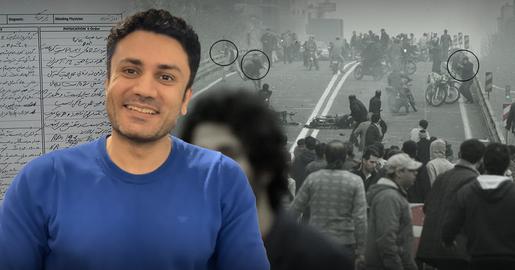
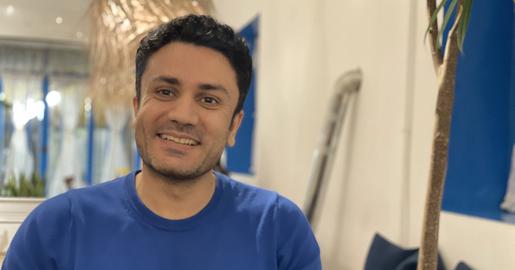
The bullet that paralyzed Behzad Yazdanpanah came from behind.
It was December 27, 2009 - a day that would become known as the bloodiest of Iran’s Green Movement protests.
He was 22, an industrial engineering student who believed in something bigger than himself. He never saw the shooter’s face. Tehran was burning that day. Even Ahmad Khatami, the city’s interim Friday prayer leader, would later call it a battlefield.
The streets were filled with the chaos of mass arrests, gunfire, and the sickening sight of pickup trucks ploughing through crowds of protesters. Thousands had come out, believing this might be the moment everything changed. They offered him a bargain.
“Tell everyone you were a member of the Basij, blame the Mojahedin [MEK] for shooting you, and we’ll pay your blood money.” He refused.
The official report was never released, leaving Behzad with only his memories and the haunting images he’s pieced together from websites and videos.
Years later, he would learn that one of his attackers died fighting in Syria.
But what the Islamic Republic’s bullets couldn’t take was his determination. After three terms of mandatory medical leave, Behzad returned to his studies at the University of Amol and completed his degree remotely.
“I wanted to finish,” he says, “so they wouldn’t think they could take everything from us.”
His professors’ greatest show of support was simply not marking him absent. But his classmates - even those who didn’t know him - rallied around him, helping him cross the finish line he’d been racing toward when that bullet found him on Ashura.
It’s been years since that December day when Tehran teetered on the brink of collapse when protesters went home as night fell.
Behzad still carries that day with him - in his wheelchair, in his memories, in his refusal to let them take everything. He was 22 when they shot him from behind. He never saw it coming. But they never saw his resilience coming either.
Fifteen years have passed since December 27, 2009, Ashura. Behzad recalls, “I was at the Kalej intersection in Tehran when the shooting started.
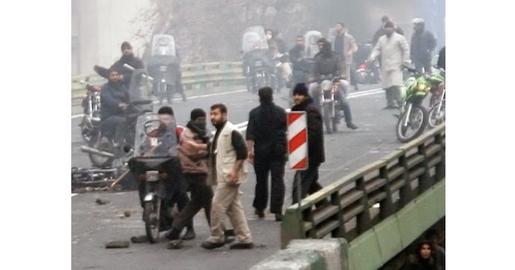
“The streets were so blocked that no vehicles could move. On one side, plainclothes agents were shooting directly at the people, while on the other side, the Special Guards were stationed.
“A very small street was also full of protesting people, and no vehicles would go down that street. The suppressing forces shot directly at people inside the alley. They didn’t even shoot in the air, and it was clear that every bullet they fired hit someone.”
According to Behzad, he was shot around 30 minutes after noon prayers. People gathered around him.
He adds, “At that moment, I didn’t know what had happened to me. I thought it was something like a heavy object hitting me and making me fall, but without causing any harm. When the people around me saw the blood, I realized I had been shot with a real bullet.”
With the help of bystanders, Behzad was put on a motorcycle. Due to his spinal injury, he had no control over his legs and couldn’t hold them.
One of the protesters sat behind him on the motorcycle simply to hold his legs. At some point, riding the motorcycle became too difficult, and with the help of citizens, he was transported in a car to Madaen Hospital.
During those days, protesters were advised to avoid public hospitals.
Behzad says, “If the people hadn’t moved me and the ambulance had taken me, the security forces would have definitely killed me.”
Doctors told him that improper handling during transportation after the bullet hit caused the most damage to his spinal cord.
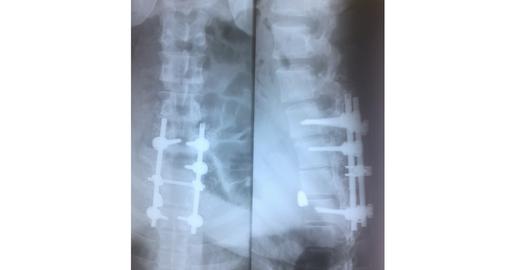
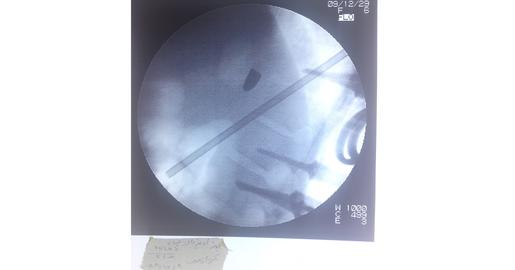
After arriving at the hospital, Behzad lost consciousness. To repair the spinal cord and the vertebrae shattered by the bullet, he underwent two surgeries within 48 hours to prevent further damage.
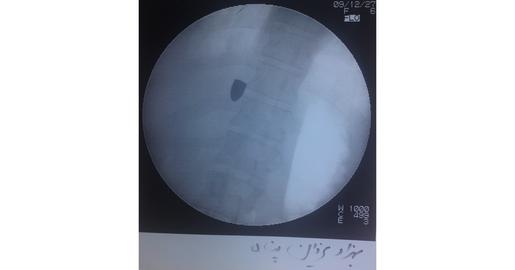
The doctors were unable to remove the bullet from his body. The bullet was lodged just one centimeter from his heart, embedded in his muscles.
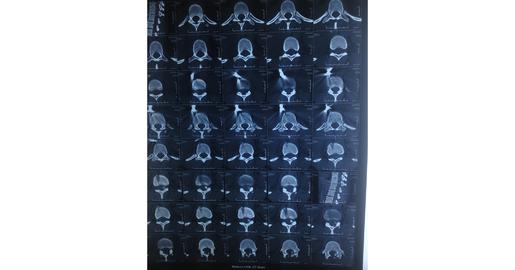
It shattered three of his vertebrae, burned and severed part of his spinal cord, caused muscle atrophy, and paralyzed his legs.
For the past 15 years, he has lived with daily, constant pain and developed Irritable Bowel Syndrome. He was under physiotherapy for two years, but doctors eventually gave up hope on his treatment.
Upon Behzad’s arrival at Madarn Hospital in Tehran, intelligence officers attempted to transfer him to a facility under their control.
This was met with strong objections from Behzad’s family. The hospital staff and his treating physician also refused to allow his transfer.
Behzad says, “My surgeon told the security forces, ‘I will not allow this patient to be moved. If you want to move him, you must give me written guarantees that you are fully responsible for his care, because even a one-centimetre shift could kill him.’”
Forty-eight hours after his surgeries, three intelligence officers from the IRGC began interrogating Behzad and asked questions like, “What were you doing at the scene? Why did you go, and what happened when you were shot?” They created a case against him.
Behzad says, “Even after the surgery, they tried to take me with them. My father says they came with flowers and sweets, trying to get his consent. They warned my father not to make this issue public. They only agreed to an interview under the condition that we say I was a Basij member and that the Mojahedin shot me.”
Security forces and law enforcement, threatening the family into silence, told Behzad’s father, “If the person who shot your son comes to the hospital tonight and shoots him in the head, no one will be able to do anything.”
Fearing for his son’s life, Behzad’s father never left his son’s side for fifteen consecutive nights. Behzad says, “He didn’t allow anyone to stay alone with me in my room, not even for a night.”
During the two weeks Behzad was hospitalized, a soldier from the security forces was assigned to watch him in his room.
Two or three months later, the trial began.
Behzad says, “The case was built around questions like what I was doing at that location that day, and why I went there. I provided my explanation and said I had filed a complaint against the shooter.
“I told the judge that my request was for this person to be identified. You say that no one had permission to shoot, so this person is a criminal. My question is, why did they shoot me? If they didn’t have permission, under what law and why did they shoot at me? Did they give a warning first? Why did they shoot at me above the waist?”
Behzad adds, “The judge asked if I had seen the shooter. I said no, but with the many cameras installed on the streets, the shooter or shooters must be identifiable. How could it be that on such a chaotic day, someone shot at the people, but they couldn’t be identified?”
In the end, the judge told Behzad’s lawyer that the family’s complaint would not be pursued, and Behzad was acquitted.
However, if they insisted on pressing charges and pursued the identification of the shooter, Behzad would be tried on a “waging war against God” charge.
But if he made a televised confession, saying that he was a Basij member and that the Mojahedin shot him, he could receive compensation and blood money.
Behzad says, “In the first two weeks, they threatened us a lot. They even told me they would charge me with waging war against God.”
Tehran’s judicial authorities imposed severe punishments on participants of the Ashura protests of 2009.
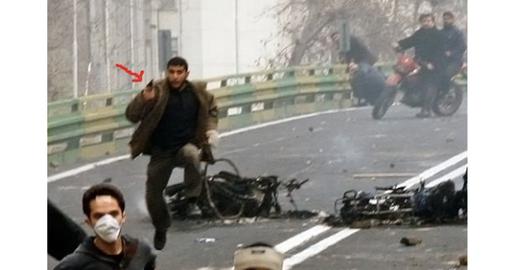
Behzad recalls: “Later, in the footage from that day, I saw three people, walking calmly, pointing handguns at defenseless people and shooting at them. By looking at these images, I can almost guess who among the three shooters was the one who shot me.
“Back then, it was said that the suppressors were Lebanese nationals, although one of them, wearing a white vest, was killed years later in the Iranian proxy wars in Syria. His name was Nowrozi, and he was from Kermanshah.”
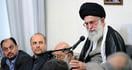
Behzad’s family filed a complaint with the Tehran prosecutor and sent a copy of the letter to the office of Ali Khamenei.
Shortly afterwards, they were contacted by Khamenei’s office, who advised them not to pursue the identification of the shooter.
However, they said that if they wanted blood money, it would be granted if they gave their consent.
Behzad says, “Remembering the past doesn’t bother me as much as it used to.
“I can now focus on the beauty that exists in life. I don’t regret anything, and if I could go back, I would do the same thing. At that time, I believed it was our duty to go. I firmly say that if I made one right decision in my life, it was that one.”
When asked what he would do if they gave him the shooter, he says, “I believe he should be put on trial, but if I have any rights and have to make a decision, I forgave him seven years after being shot.”
Interested in writing for IranWire?
Share your stories.


comments