



The Revolutionary Guards: An Introduction
The Islamic Revolutionary Guard Corps (IRGC) is the Islamic Republic of Iran’s most important institution. The military-security institution commands huge influence in every aspect of Iranian public life, from culture and the environment to the economy, politics and judicial process. Whatever the field or area, the IRGC is not required to report to anybody and is answerable to no one.
The IRGC was created early after the 1979 Islamic Revolution by the order of the founder of the Islamic Republic, Ayatollah Ruhollah Khomeini. Its declared mission was to safeguard the revolution and its accomplishments. As the years have gone by, it has expanded its sphere of activities. The entities under its control have multiplied to such a degree that it now operates effectively as a parallel government. It interferes in all current affairs of the country and it aims to have control over every aspect of the way Iran is run.
In a series of reports, IranWire presents a detailed portrait of this powerful and mysterious institution and, for the first time, identifies and explains all bodies, institutions and other entities operating under the umbrella of the Revolutionary Guards, at the same time outlining its activities through an infographic and an interactive diagram.
The infographic is a visual representation of the Guards’ organizational structure and presents all institutions under the control of IRGC in one map. It resembles a family tree, a portrait of the IRGC with all its children, grandchildren and great-grandchildren — a dramatic picture of power in Iran today.
In the interactive diagram, the viewer is able to use the mouse to see how various entities under the control of the Guards emerged, and how they are connected — exactly like a family tree.
IranWire has aimed for this series and the overall project to be informative and a solid research tool. But it is not perfect, and there will always be room for updates, enhancements and further information. We welcome your views, ideas and knowledge, so please do get in touch.
***
The IRGC Aerospace Force(Nirooy-e Hava Faza-ye Sepah)
The IRGC’s Aerospace Force (or NEHSA) was created on September 17,1985, following the order from then Supreme Leader Ayatollah Ruhollah Khomeini to establish three branches of the IRGC: The Navy, Ground Forces, and Air Force.
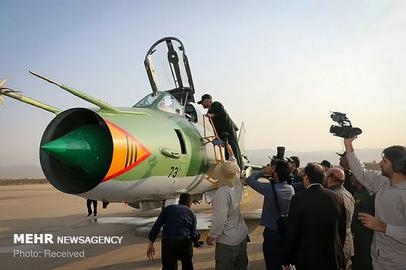
In its early years after the 1979 Revolution, the IRGC Air Force was relatively small, primarily involved in transporting regime officials via Tehran’s Mehrabad Airport. The unit played no significant role during the Iran-Iraq War (1980-88). According to Mohsen Rezaei, IRGC’s chief commander during the war, while there were plans to establish an IRGC Navy and Air Force in the early 1980’s, these efforts stalled until Khomeini gave his directive in 1985. According to Rezaei, several military and political leaders objected to the plans, but after receiving Khomeini’s order, IRGC commanders began training programs for operating ballistic missiles, surface-to-surface missiles, anti-ballistic missiles, anti-aircraft artillery, and piloting jets and helicopters.
In 1989, the military division of the IRGC’s Air Force became operational after borrowing fighter jets from the regular army. After the war ended in 1988, the IRGC’s focus was to expand its military presence by establishing missile bases across the country.
The second phase of the expansion took place in 2009, when the IRGC’s space program started, transforming the Air Force into the Aerospace Force, which now also manages advanced ballistic, cruise, and hypersonic missile systems.
Another major phase was in 2015, when the IRGC’s Aerospace Force transferred its helicopter fleet to the newly established IRGC Aviation Unit (Nirooy-e Havanirooz), part of IRGC Ground Forces.
The IRGC Aerospace Force has since grown in power and influence within Iran and throughout the region, through developing advanced missiles. The IRGC commanders claim that the force holds the strongest missile capability in the Middle East.
Chief Commander of the IRGC Aerospace Force
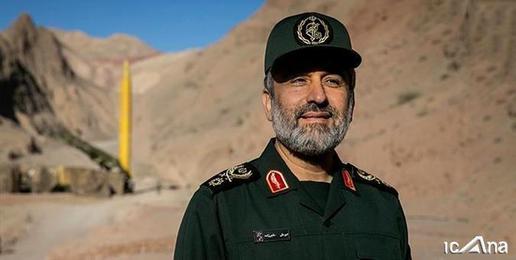
The chief commander of the IRGC Aerospace Force is appointed by the Supreme Leader, who acts as the commander-in-chief of the Armed Forces. This is done upon the recommendation of the chief commander of the IRGC. The deputy commander of the Aerospace Force is appointed by the chief commander of the IRGC. Since October 2009, Amir-Ali Hajizadeh has served as the chief commander of the Aerospace Force. His predecessors include:
- Musa Rafan (September 1985–May 1990)
- Hussein Dehghan (May 1990–January 1992)
- Mohammad-Hussein Jalali (January 1992–November 1997)
- Mohammad Bagher Qalibaf (November 1997–July 2000)
- Ahmad Kazemi (July 2000–September 2005)Alireza Zahedi (September 2005–February 2006)
- Hussein Salami (February 2006–October 2009)
The Aerospace Force structure
The IRGC Aerospace Force is headquartered in Chitgar, Tehran. The force has four military subunits: ballistic missiles, cruise missiles, air defense systems, fighter jets and helicopters, and drones. The force also includes other divisions for coordination, operations, cultural affairs, and public relations and publications.
The Supreme Leader’s Representative in the IRGC Aerospace Force
The Supreme Leader’s representative in the IRGC Aerospace Force is appointed by his representative in the IRGC. The representative holds an independent office and is responsible for appointing the head of public relations and promotions within the force.
Hojatolislam Ali Rezaei has served as the Supreme Leader’s representative in the IRGC Aerospace Force since 2018, succeeding Hojatolislam Moradi. He was appointed by Hojatolislam Abdollah Haji Sadeghi, the Supreme Leader’s representative in the IRGC.
Airborne Operations Command (Farmandeh Amaliat-e Hava’ee)
The Airborne Operations Command conducts airborne support operations for other IRGC forces. The center has one helicopter department, and three airplane departments: logistics, transportation, and combat. A critical part of its mission is providing aerial emergency assistance during natural disasters such as floods, earthquakes, and fires.
Missile Systems (Samaneha-ye Mooshaki)
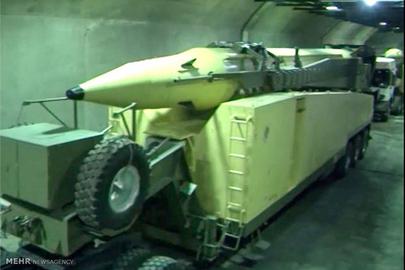
The IRGC Aerospace Force exclusively oversees Iran’s surface-to-surface missile program. It manages an extensive range of ballistic and cruise missiles capable of delivering precise strikes and evading defenses. The force also works in close coordination with the Khatam-al-Anbia Air Defense Headquarters for its air defense systems.
Ballistic Missiles
The IRGC’s ballistic missile arsenal includes systems such as Khorramshahr, Zolfaghar, Haj Ghasem, Khaybar Shekan, Fateh-110, Qiam, Shahab-3, and Ghadr, with ranges from 700 to 2,000 kilometers. These missiles can carry heavy warheads and are equipped with advanced guidance systems for accurate targeting and avoiding anti-missile defense systems.
Cruise Missiles
IRGC Aerospace Force operates a variety of cruise missiles, such as Noor, Soumar, Hoveyzeh, and Ali, which are designed to target land and sea assets. These cruise missiles have ranges between 300 to 1,000 kilometers and are capable of evading sophisticated defense systems. The most recent development in its missile arsenal is the hypersonic Fattah missile, with a range of 1,400 kilometers and a speed of Mach 13 to 15, capable of evading all known missile defense systems. Fattah’s advanced propulsion and maneuvering abilities make it effective both inside Earth’s atmosphere and in space, solidifying its place as one of the most advanced weapons in Iran's arsenal.
Suface to Air missiles (SAM)
The IRGC Aerospace Force is also responsible for a range of air defense systems including SAM-6 and HQ-2 systems which are Iranian adaptations of the original Russian and Chinese systems. The air defense systems such as Khordad 3, Khordad 15, Bavar-373, Mersad, Sam-4, and HQ-2, which are capable of tracking and destroying aircraft, cruise missiles, and drones within short to medium ranges.
These systems are administered jointly with army’s Khatam al-Anbiya Air Defense Headquarters which is responsible for defending Iran’s airspace against hostile intrusions.
Missile Cities (Shahrha-ye Mooshaki)
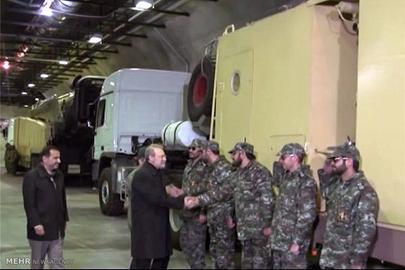
The Aerospace Force has three identified missile cities, but, according to IRGC commanders, the force owns and operates even more undisclosed “missile cities.” According to IRGC commanders, “These cities are constructed within the hillside of high-altitude mountains, located 500 meters below the ground surface and contain missiles of varying ranges. The missiles are mounted on launchers and can be launched within seconds.”
Together with the IRGC’s underground “Missile Cities,” Iran’s strong missile systems provide a highly fortified strategic deterrence network and ensure a rapid response capability.
The Commander in Chief of the Armed Forces
The Chief Commander of the IRGC
The Supreme Leader’s Representative in the IRGC
The IRGC Security and Intelligence Agencies
The IRGC's Social, Cultural, Scientific and Educational Institutions
The IRGC Commercial and Financial Institutions-(Khatam-al-Anbiya Construction Headquarters)
The IRGC Commercial and Financial Institutions-(Bonyad-e Ta’avon-e Sepah)
The Organization for the Mobilization of the Oppressed
The Basij Cooperative Foundation
Cyberspace Institutions and The Physical Training Organization of the Basij
Basij Headquarters and Military Organizations
Basij Social and Cultural Organizations
The Islamic Revolutionary Guards Corps: Structure and Missions

Interested in writing for IranWire?
Share your stories.


comments