



The Revolutionary Guards: An Introduction
The Islamic Revolutionary Guard Corps (IRGC) is the Islamic Republic of Iran’s most important institution. The military-security institution commands huge influence in every aspect of Iranian public life, from culture and the environment to the economy, politics and judicial process. Whatever the field or area, the IRGC is not required to report to anybody and is answerable to no one.
The IRGC was created early after the 1979 Islamic Revolution by the order of the founder of the Islamic Republic, Ayatollah Ruhollah Khomeini. Its declared mission was to safeguard the revolution and its accomplishments. As the years have gone by, it has expanded its sphere of activities. The entities under its control have multiplied to such a degree that it now operates effectively as a parallel government. It interferes in all current affairs of the country and it aims to have control over every aspect of the way Iran is run.
In a series of reports, IranWire presents a detailed portrait of this powerful and mysterious institution and, for the first time, identifies and explains all bodies, institutions and other entities operating under the umbrella of the Revolutionary Guards, at the same time outlining its activities through an infographic and an interactive diagram.
The infographic is a visual representation of the Guards’ organizational structure and presents all institutions under the control of IRGC in one map. It resembles a family tree, a portrait of the IRGC with all its children, grandchildren and great-grandchildren — a dramatic picture of power in Iran today.
In the interactive diagram, the viewer is able to use the mouse to see how various entities under the control of the Guards emerged, and how they are connected — exactly like a family tree.
IranWire has aimed for this series and the overall project to be informative and a solid research tool. But it is not perfect, and there will always be room for updates, enhancements and further information. We welcome your views, ideas and knowledge, so please do get in touch via email, Twitter or Facebook.
***
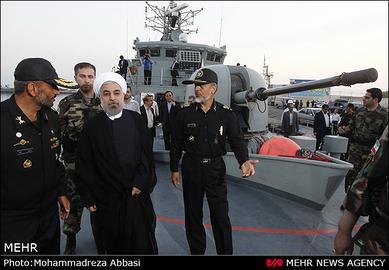
The IRGC Navy (Nirooy-e Daryaei-e Sepah)
The IRGC Navy (Nirooy-e Daryaei-e Sepah) was established in 1981, shortly after the start of the Iran-Iraq War (1980–1988). Initially, the naval unit was based on the Musa Bay islands in the Persian Gulf, near Iraq.By 1982, the IRGC Navy began expanding its role, eventually taking over all naval operations. It launched operations from the Nuh and Masoudieh naval bases. On September 17, 1985, Ayatollah Ruhollah Khomeini instructed Mohsen Rezaei, the IRGC’s chief commander, to establish the Ground, Navy, and Air Forces. During the war with Iraq, the IRGC Navy played an important role in major operations like Valfajr VIII, which led to the capture of the strategic Al-Faw Peninsula near Basra, Iraq.
After the war, the IRGC prioritized securing its position in the Persian Gulf. From 1990 to 1997, Ali Shamkhani, who was the commander of the Islamic Republic’s Navy, also headed the IRGC Navy. In 1997, an independent chief commander was appointed as the head of the IRGC Navy, marking a new phase of expansion.
In the first phase of this expansion, the Khatam-al-Anbiya II Headquarters was established. In 1999, the IRGC Navy was tasked with safeguarding the Persian Gulf and the Strait of Hormuz. This strategic area includes a 745-mile sea border shared with Iraq, Kuwait, Saudi Arabia, Qatar, Bahrain, Oman, and the United Arab Emirates. The IRGC divided the region into five operational areas, all under the Khatam-al-Anbiya II Headquarters. The Khatam-al-Anbiya I Headquarters, belonging to the Islamic Republic’s Navy, also operates here but falls under the supervision of Khatam-al-Anbiya II. The IRGC Navy has bases in Bushehr, Bandar Lengeh, Asaluyeh, Mahshahr, Abu-Musa Island, and Bandar Abbas.The IRGC also has an international base near the Strait of Hormuz, supporting airborne and naval operations of IRGC in the region. Additionally, the IRGC Navy has bases at Jask and Chabahar on the Gulf of Oman, although security in this area is the responsibility of the Islamic Republic’s Navy and not IRGC. In northern Iran, the key maritime base is Samen-al-Hojaj, located in Babolsar.
The IRGC Navy has five divisions including navy fleet, missiles, commandos, naval aviation, and drones. Its five regions in the Persian Gulf are:
- Saheb-al Zaman (named after the 12th, Hidden Imam of Shias) is based in Bandar Abbas. It is the IRGC Navy’s most crucial base due to its proximity to the Strait of Hormuz.
- Nuh Nabi (Noah the Prophet) is based in Bushehr and is tasked with the safety and security of the Khark Island.
- Imam Hussein (the 3rd Imam of Shias) is based in the port of Mahshahr.
- Sar-Allah (the blood of Allah) is based in the Asaluyeh Port.
- Imam Mohammad Bagher (the 5th Imam of Shias) is based in Bandar Lengeh and is tasked with the security and safety of four islands: Abu-Musa, Sirri, and Greater and Lesser Tunbs. This base also oversees the area from Qeshm Island to the west of Kish Island.
The IRGC Navy’s commanding station is based in Bandar Abbas. Beyond securing sea borders, this force has also participated in other operations such as safeguarding commercial ships and cargos and fighting against pirates.
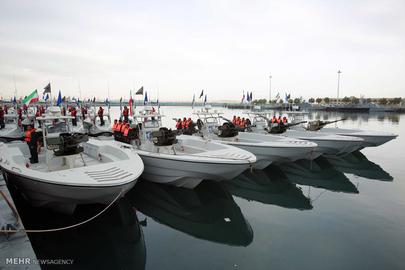
The IRGC Navy’s asymmetric warfare tactics include the use of naval mines, attacks with missile-equipped speedboats, and suicide missions, as showcased in its maneuvers.
The Commander of the IRGC Navy
The Supreme Leader, as commander-in-chief of the armed forces, appoints the IRGC Navy’s chief commander upon the recommendation of the IRGC’s chief commander. Since its establishment in 1985, the IRGC Navy’s commanders have been:
- Hussein Alaei (1985–1990)
- Ali Shamkhani (1990–1997)
- Ali-Akbar Ahmadian (1997–2000)
- Morteza Saffari (2000–2010)
- Ali Fadavi (2010–2018)
- Ali-Reza Tangsiri (2018–present)
The Supreme Leader’s Representative
The Supreme Leader’s representative in the IRGC Navy is appointed by the Supreme Leader’s IRGC representative and has offices in all five regions. The Supreme Leader’s representative in the IRGC Navy is responsible for appointing the heads of the following divisions of the IRGC Navy: political, public relations, and publicity.
Hojatolislam Abdolhamid Raisi is the current Supreme Leader’s representative in the IRGC Navy who was appointed in 2021 by the Supreme Leader’s representative in the IRGC, Hojatolislam Haji Sadeghi. He replaced Hojatolislam Abdolnabi Sedaghat who held this job for 10 years. Like other Supreme Leaders representatives in various branches of the IRGC, his mission to boost Islamic values and beliefs among members of this force.
The Divisions
The IRGC Navy’s deputy commander is appointed by the IRGC commander. The Navy has divisions for intelligence, investigation, development, culture, safety, training, operations, coordination, human resources, and medical services.
The Khatam-al-Anbiya II Headquarters The Khatam-al-Anbiya II Headquarters is tasked with securing the Persian Gulf and Strait of Hormuz. The IRGC Navy executes this task through its five bases in the south, but the Khatam-al-Anbiya II Headquarters is the most active base.
Both the Khatam-al-Anbiya I (Belongs to the Islamic Republic’s Navy) and II (IRGC Navy) are under the Khatam-al-Anbiya Central Headquarters in Tehran, but IRGC Navy is considered more significant. The central headquarters acted as the primary command center during the latter stages of the Iran-Iraq war and now serves as an operational coordinator for military bases.
The Asef Missile Brigade
The Asef Missile Brigade is in Minab, a county along Iran's southern coast near the Sea of Oman. Overlooking the strategic Strait of Hormuz, this location is critical being the only passage from the Persian Gulf to the open ocean. A significant portion of the world's energy supply, including a third of the world's liquefied natural gas and nearly 25% of global oil consumption, passes through this waterway. The Asef Missile Brigade thus plays a crucial role in Iran's defensive strategies and missile systems.
The brigade is composed of four battalions, each with a distinct mission:
- 1st Battalion: Launching short-range missile attacks on sea targets.
- 2nd Battalion: Launching medium-range missile attacks on sea and land targets.
- 3rd Battalion: Providing long-range missile support coverage for offensive operations.
- 4th Battalion: Defending the coastline and securing sensitive zones within the Strait of Hormuz.
The Aba-Abdullah Commandos Special Forces (Niroohay-e Vijeyeh Takavari-e Aba-Abdullah)
The Aba-Abdullah Commandos Special Forces, established in 2007 on Farur Island in the Persian Gulf, is IRGC’s crucial Navy units. The name of the unit which is now a division means “Father of Servants of God”. It consists of approximately of 500-600 personnel, including marines, frogmen and snipers trained in amphibious warfare, naval boarding and heliborne operations. One of the division’s primary missions is to protect Iranian commercial vessels as demonstrated in its 2012 anti-piracy operation off Somalia's coast, where the unit conducted a 117-day mission.
In June 2016, IRGC Navy Commander Ali Fadavi told the media that IRGC was training the naval forces of “Axis of Resistance”, the ant-Israeli network of Iranian-backed militias and political groups in the Middle East. In recent years, the IRGC has trained and recruited many members of this network to fight alongside IRGC forces in different countries including Iraq, Yemen and Syria.
Aba-Abdullah Commandos can be rapidly deployed to defend or engage in offensive operations along Iran’s coastline and in the Persian Gulf.
The Imam Sajjad Commandos and Marine Corps (Tip-e Takavaran va Tofangdaran-e Daryaei-e Imam Sajad)
Based on Abu-Musa Island, The Imam Sajjad Commandos and Marine Corps oversee the defense operations of 180 Persian Gulf Islands such as Qeshm, Sirri, Greater and Lesser Tunbs, and Abu-Musa. The name of the corps refers to the 4th Imam of Shias. Apart from the Imam Sajjad Corps, another corps, Ansar-al-Hojjat, is also active in this area. In the words of the IRGC’s naval official, Sadeq Amuie, the islands are an important defense against potential threats, attacks and infiltration by the enemy. The corps prevents enemy incursions by establishing defensive positions on these islands, which serve as a critical line of defense for Iran
The Underground Naval Base Officially announced in 2016, the IRGC’s underground naval base stores various military assets, including speedboats and advanced weapons like the Hoot torpedo. Its location remains undisclosed, and only limited information about its operations has been made public.
Imam Khamenei Naval University (Daneshgah-e Daryaei-e Imam Khamenei)
The university is located in the city of Ziba Kenar in Gilan province. This is an unusual name for an institution in Iran. The title “Imam” is usually used for the leader of the 1979 Islamic Revolution. The university was originally a technology and science academy, but after merging with Naval Sciences College in Chalus, and the Naval University of Bandar Abbas, it changed its name and expanded its reach in 2016. Currently, the university has 180 faculty members and 3,500 students.
In January 2024, it was reported that 200 Yamani Houthi rebels, who have been have threatened and attacked international shipping in the Red Sea since the outbreak of war following Hamas’s attack against Isreal on October 7, 2023, have been trained at this naval academy. According to the report, A section is dedicated to the six-month training course for “foreign mercenaries” under the command of the IRGC’s elite Quds Force, including the Houthis. “The first course for Houthis in naval science and technology was launched in January 2020, and the Houthis were housed separately from other students, who were barred from interacting with them in order to prevent intelligence leaks,” it added.
Seyyed-al-Shohada Supreme Center of Jihadi and Commando Training (Markaz Ali-e Tarbiat-e Jahadi va Takavari-e Seyyed-al-Shohada)
The Seyyed-al-Shohada Supreme Center of Jihadi and Commando Training was established in 1983. The name of the center means “the master of all martyrs” and refers to Hussein, the 3rd Imam of Shias. Some of the courses offered are diving, sailing, and repairing gasoline engines.
Self-Sufficiency Research and Jihad Organization (Sazman-e Tahghighat va Jahad-e Khod Kafaee)
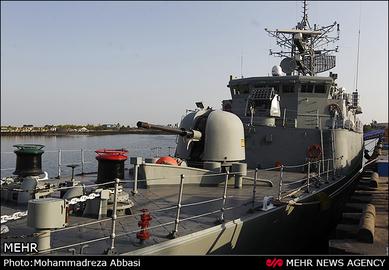
Self-Sufficiency Research and Jihad Organization is a scientific and educational organization which designs and manufactures naval weapons and industries. The headquarters of the organization is in Tehran, next to the IRGC Navy Headquarters, but it is mainly active in the southern provinces. The organization manufactures boats, speedboats, destroyers, submarines, and equips them with advanced firearms.
The organization collaborates with the Shahid Mahallati Shipbuilding Institute, which is a subunit of Khatam-al-Anbiya Construction Headquarters. The organization has also founded the Center for Naval Invention and Innovation (Markaz-e No Avari and Roshd-e Fanavari) in Bandar Abbas, in cooperation with the Amir-Kabir Polytechnic University. It also benefits from the naval laboratory of the IRGC’s Imam Hussein University.
The Research Center for Maritime Medicine (Markaz-e Tahghighat-e Teb-e Darya)
The Research Center for Maritime Medicine was established in 2011. It is administered by the Medical Division of the IRGC Navy, but the center operates as a subsidiary of the IRGC’s Baqiyatallah University of Medical Sciences.
Shajareh Tayebeh Schools (Madares-e Shajareh Tayebeh)
Shajareh Tayebeh Schools consist of 32 schools in different parts of Iran that are run by the IRGC Navy. One of its most important programs is to introduce and recruit students to the IRGC Navy in Khuzestan, Bushehr, Hormozgan and Sistan, and Baluchistan provinces. These courses are designed for students above the age of thirteen. The first course takes 45 days and the second is a one-year course. The schools have formed a religious and educational network in the southern provinces called Beit-ol-Zahra. These schools hold courses in Koranic teaching and are involved in a host of approaches to teach the Koran such as competitions, drawing, crafting and storytelling.
Medical Centers (Marakez-e Darmani)
The Navy is one of the most active units of the IRGC in terms of providing medical services. The IRGC Navy has built a robust network of medical facilities, especially in the southern provinces of Iran. These hospitals provide services to IRGC personnel and the general public. The IRGC Navy’s main hospitals include:
Saheb-al-Zaman Hospital in Bandar Abbas, founded in 1997, has 130 beds and provides a full range of services to inpatients and outpatients, including general surgery, orthopedics, brain surgery, ICU (intensive care unit), NICU (neonatal intensive care unit), CT scanning, MRI (magnetic resonance imaging), LDR (labor, delivery, and recovery), CCU (cardiac care unit), genetics laboratory and other modern medical services, clinics and paraclinical laboratories.
Hazrat Qaem Hospital in Bushehr has 76 beds and provides emergency services, surgeries, internal medicine, maternity care, pediatrics, radiology, and laboratory facilities.
Muslims Hospital in Shiraz was established in 1931 through religious endowment and was later handed over to IRGC after the 1979 revolution. The management of the hospital was later overseen by the IRGC Navy. The hospital provides services to the members of the armed forces and general public. It includes units for surgery, orthopedics, ophthalmology, urology, obstetrics and gynecology, ENT, infectious diseases and allergies as well as pediatric and neonatal pediatric, endocrine, gastroenterology, cardiovascular units. The hospital also has other units such as emergency, radiology (MRI, CT scan, Sono, OPG, osteoporosis, mammography), laboratory, physiotherapy, audiometry, opticians, dentistry as well as special departments, including CCU, ICU, and NICU.
Mahshahr Hospital, in the port city of Mahshahr in Khuzestan province, was inaugurated in 2017. It provides emergency services and is equipped with special units and departments such as lab, radiology, ultrasonography, dentistry, physiotherapy, and pharmacy.
Bandar Lengeh Hospital, in Hormozgan province, has 32 beds and was established by the Hormozgan School of Medicine and the IRGC Navy in district five of Hormozgan province. The hospital has units in pharmacy, laboratory, ultrasonography, radiology including general medical services, physiotherapy, internal medicine, ophthalmology, nose and throat surgery, women and pediatrics.
Asaluyeh Shahid Soleimani Hospital, in the Persian Gulf port of Bushehr, is a 64-bed hospital that was founded as a joint project of the Ministry of Health and the IRGC. It offers basic and emergency medical services with necessary laboratories and medical imaging equipment.
Sayyed al-Shohada Clinic, in the port city of Chabahar in Sistan and Baluchistan province, is a specialized clinic offering appointments for health services such as dentistry, emergency room, gynecology, pediatrics, and gastroenterology.
Khatam al-Anbiya Jask Hospital in Jask in Hormozgan province was established in 2007 with 32 beds and was expanded to 64 beds in 2018. It has a CCU, psychiatric units and three surgery rooms. It also has special units in internal medicine, pediatrics, women, surgery, dialysis, and thalassemia.
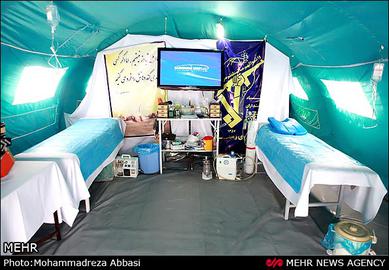
In addition to these permanent facilities, the IRGC Navy has deployed portable hospitals to provide medical services.
Qamar-e Bani-Hashem Headquarters (Gharagah-e Ghamar-e Bani Hashem)
The IRGC Navy is involved in both commercial and social activities, mainly acting as a contractor building wharfs and piers. The IRGC Navy also operates a Housing Cooperative Foundation, which helps impoverished communities. This foundation undertakes small housing projects, distributes food, and builds homes for those in need. It is through this Qamar-e Bani-Hashem Headquarters that the IRGC Navy implements many of its social programs.
Furthermore, the IRGC Navy has been tasked with fighting against smuggling and trafficking in the Persian Gulf. However, little publicly available information exists about the specifics of these collaborations or the details of the IRGC's anti-smuggling operations.
It is worth noting that despite the IRGC Navy’s assigned role in combatting smuggling, it has also been accused of being involved in smuggling activities through its own piers in southern ports. While these allegations have persisted, the specifics of these claims and the Navy's overall involvement remain largely undisclosed.
The Commander in Chief of the Armed Forces
The Chief Commander of the IRGC
The Supreme Leader’s Representative in the IRGC
The IRGC Security and Intelligence Agencies
The IRGC's Social, Cultural, Scientific and Educational Institutions
The IRGC Commercial and Financial Institutions-(Khatam-al-Anbiya Construction Headquarters)
The IRGC Commercial and Financial Institutions-(Bonyad-e Ta’avon-e Sepah)
The Organization for the Mobilization of the Oppressed
The Basij Cooperative Foundation
Cyberspace Institutions and The Physical Training Organization of the Basij
Basij Headquarters and Military Organizations
Basij Social and Cultural Organizations
The Islamic Revolutionary Guards Corps: Structure and Missions

Interested in writing for IranWire?
Share your stories.


comments