




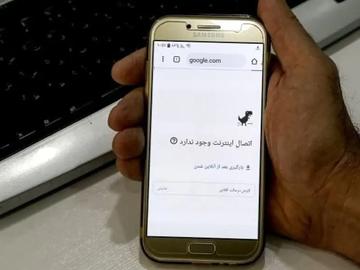
The Islamic Republic has long maintained a list of prohibitions for Iranians. Over time, many of these bans have been lifted or simply forgotten, such as those on playing chess or eating certain types of fish. However, one restriction remains firmly in place and is perhaps more relevant than ever: the ban on free internet access.
In recent years, the Iranian government has intensified its efforts to control citizens' access to the internet. The push for greater control stems from repeated criticisms by the Supreme Leader, who has described social media as "uncontroled". As a result, the concept of "national sovereignty" on the internet has become a central focus of government policy.
Simultaneously, the development of a National Internet, or National Information Network, was prioritized to bolster the Islamic Republic’s control over the virtual space. But, all these efforts face a significant new challenge: the emergence of satellite internet services like Starlink, which threaten the state's control over digital access.
Arrival of Starlink in Iran
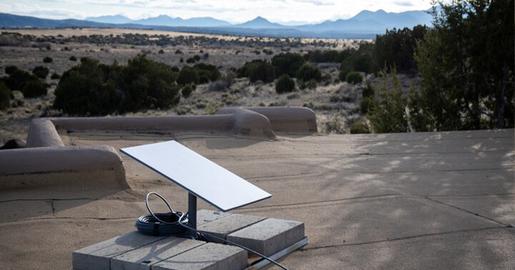
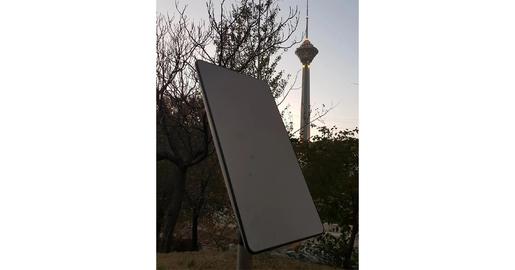
Last week, a photo was circulated on social media showing the launch of Starlink in Tehran, with the iconic Milad Tower visible in the background. Reports have also emerged that some buildings in major cities are now equipped with satellite internet.
According to the Etemad newspaper, the Starlink Mini device recently made its way into Iran through Sulaymaniyah in Iraq and is being sold in Tehran for prices ranging from 40 to 100 million tomans ($660 to $1,600).
Starlink has been in use in Iran for some time. During the 2022 Woman, Life, Freedom protests, reports indicated that Starlink was already being used by citizens.
Elon Musk, the owner of SpaceX, announced on September 26, 2022, that he would activate Starlink services for Iranians. Following that, there were reports that hundreds of satellite internet devices were smuggled into the country.
Today, accessing satellite internet has become significantly easier. Customers can now order the necessary Starlink equipment online, collect it in person, and pay on the spot. However, the cost of accessing Starlink in Iran remains high. According to the Starlink website, the price for equipment in the residential plan is approximately $599 (for the satellite dish and router), with a monthly subscription fee ranging from $110 to $120.
In addition to the challenge of smuggling Starlink devices into Iran, the high subscription costs – exacerbated by banking sanctions and the exchange rate between dollars and rials – pose another barrier to access. As a result, in some areas, citizens have opted for group use of a single Starlink device to share the cost.
How Many Starlink Devices Are Active in Iran?
In recent days, a screenshot of a map of Iran has been circulating, showing the number of active Starlink devices in the country. The image was sourced from the website satellitemap. space, which explicitly states that it is not affiliated with Starlink or SpaceX. At the bottom of its main page, the site prominently displays the disclaimer "Not affiliated with SpaceX or Starlink" in red. Additionally, the data on the site is based on self-reported information from users and is published without any form of verification.
While the information on this website cannot be considered fully reliable, it would also be incorrect to assume that all of its data is entirely inaccurate.
Amir Rashidi, a security and internet access researcher, told IranWire: "It’s impossible to provide an exact number of Starlink devices in Iran, but based on my estimate, around six to seven thousand devices have been imported. However, not all of them are currently active." According to data published on websites like Tesla Drive and Space, by the end of 2022, there were approximately 800 active Starlink devices in Iran.
Milad Nouri, a technology activist and IT expert, told Shargh newspaper: "Starlink has significantly increased competition with Iranian internet service providers. The only competitive advantage of Iranian operators was their local presence. However, in recent years, internet package sizes have decreased, quality has worsened, disruptions have increased, and families are paying increasingly high prices for VPN services. These factors mean that the cost Iranian users pay for the internet is now comparable to the price of Starlink services."
Islamic Republic's Battle with Starlink
The Ministry of Communications in the Ebrahim Raisi administration has made significant efforts to combat the use of Starlink in Iran. One result was the requirement by the International Telecommunication Union (ITU) that Starlink comply with the territorial laws of the Islamic Republic.
Isa Zarepour, the former Minister of Communications and Information Technology said in 2021: "Iran welcomes the activation of satellite internet in the country, on the condition that they comply with Iran's territorial laws. These laws have been communicated to companies such as Starlink, OneWeb, and other operators in this field."
The Islamic Republic’s attempt to limit Starlink in Iran extended beyond legal actions. In September 2023, Elon Musk disclosed during a meeting with the Israeli Prime Minister that the Islamic Republic had sent him a letter expressing its displeasure after the establishment of Starlink services in Iran.
Additionally, this year, reports emerged that following Starlink's entry into Iran, the Islamic Republic, with the assistance of its legal teams, sought help from the International Telecommunication Union (a United Nations subsidiary based in Geneva) to prevent the service's expansion in the country.
However, these efforts appear to have a limited impact. According to a report by the Parliament Research Center, it is increasingly difficult, if not impossible, to counter Starlink satellite internet due to advancements in technology.
Is Starlink Safe?
Amir Rashidi, a security and internet access researcher, said, "Yes, the equipment required to use Starlink is not traceable." He added, "However, I strongly advise users who rely on Starlink for secure and free internet access not to use it to access Iranian platforms or even Iranian websites, as they may be identifiable through these portals. For accessing non-Iranian sites or platforms, Starlink is a very safe tool."
He also noted that shared use of Starlink equipment does not pose any risk if all users follow proper security protocols.
In a related post on the social media platform X, an internet freedom activist cautioned: "When a trend gains momentum, fraudsters often take advantage. Since buying and selling Starlink is illegal in Iran, users cannot make payments through official sites or legal portals. Instead, they have to use cryptocurrencies or anonymous methods, making the market a target for fraud. If someone wants to buy Starlink, they should be careful to avoid scams."
Another issue with using Starlink in Iran is the legal risk. While the Islamic Republic's judiciary has said that using satellite internet itself is not a crime, the equipment required to access it is considered smuggled. Thus, carrying, storing, supplying, or selling these devices is illegal.
Bans That Did Not Remain
The law prohibiting the use of satellite dishes in Iran was passed in 1994. According to the first article, the import, distribution, and use of satellite-receiving equipment were banned, except in cases specified by the law. The second article mandated that the Ministry of Interior use police forces or the Basij paramilitary force to collect satellite equipment as quickly as possible.
Although the law banning satellite use has never been officially lifted, it has largely fallen into disuse. After years of police raids into citizens' homes, confiscating satellite dishes, and imposing fines on owners, the law has become largely unenforced.
Similar examples exist in Iran’s legal history. Chess was once banned, as were eating Starry Sturgeon fish, making video calls, and allowing women to enter stadiums. Over time, either the laws prohibiting these activities were repealed or they simply stopped being enforced. Likewise, laws regarding internet censorship and filtering will likely be abandoned or repealed in the future, whether through the widespread use of satellite internet by citizens or by other means.

Interested in writing for IranWire?
Share your stories.










comments