



She struggles to hold back tears as she recounts her experiences, yet she continues speaking.
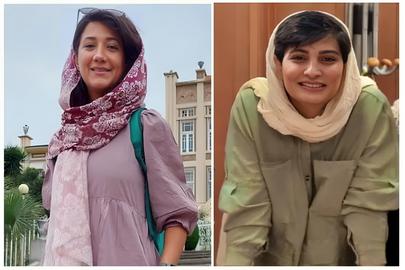
Mahsa Ghorbani, an Iranian international football referee, describes enduring intense interrogations, threats of acid attacks, staged car accidents, and psychological torture.
She also reveals that officials falsely claimed she was too ill to officiate, even sending a letter to FIFA to corroborate this claim.

Ghorbani was scheduled to serve as an assistant video referee (VAR) for the Tehran Derby on March 13. However, just two days before the match, officials informed the Football Federation that she would no longer be officiating.
"We were aware that Mahsa wouldn't be officiating this game," a source within the Football Federation told IranWire. "We hoped everything would resolve without complications."
The source also mentioned a tense meeting at the Ministry of Sports two days before the derby. Ghorbani now tells IranWire that Iranian women often face these struggles alone.
Her dream, often shared with fellow referees, is, "One day, I’ll officiate at the world’s biggest event, under Iran’s flag, without the mandatory hijab, to bring the voice of my people to the world."
According to reports, due to the security pressures you faced in recent months after your name appeared on the list of VAR referees for the Esteghlal vs. Persepolis match, you decided to leave the country. We also remember that although you were listed as one of Iran's female international referees, your name was repeatedly removed from the Federation's list to prevent FIFA from selecting you for men's games. However, after the March 2024 incident and your inclusion as a referee for the Tehran derby, you were completely removed from the list. Can you tell us more about this?
Yes, after it was officially announced that I was one of the VAR referees for the Tehran derby, and FIFA approved me within 48 hours, calls started coming in—first from the Football Federation's security and then from the Ministry of Sports' security.
Soon, people I didn't know began contacting me without explaining who they were or where they came from. When I asked the officials at the Federation about them, they told me that high-level security agencies had taken over my case.
Initially, they politely told me to withdraw from the match. Then they asked me to write a letter saying I wasn’t mentally or emotionally fit to officiate. After that, they asked me to sit in front of a camera and say I was ill and unable to officiate.
Accepting this was very difficult for me, and in the end, I didn’t agree to any of their demands. It reached a point where they began questioning my clothing at international games, asking me to confirm that I had been undressed abroad. Throughout these events, they spoke to me in vulgar language and threatened me. In the end, I didn't give in under all that pressure.
While the Football Federation was removing your name from the list of referees for the Tehran derby, we at IranWire reported, based on security sources, that plainclothes security forces had come after you. The Federation had unofficially denied what you said at the time. But you mentioned that they used vulgar language during interrogations or conversations. Could you elaborate on that?
Security agencies became involved in my case when the Football Federation's security and the Ministry of Sports' security realized they couldn’t influence my decision.
At that point, plainclothes agents and security forces started approaching me. Their words had a significant psychological impact on me. They told me I had to confess that I had been naked when traveling abroad.
They insisted I admit that, when attending international competitions, I wanted to show my body. When I rejected these claims, they would slam the table, get angry, and raise their voices.
I'd apologize, but they would say things like, "Shut up," "We've destroyed bigger people than you," and "The easiest way is to diminish people and then erase them"… They clearly threatened to kill me.
They said, "We will kill you too." They added, "Before you, others came here, went through that door, suddenly got into a car accident, and died. No one ever knew what happened."
They repeatedly threatened me with acid attacks, saying, "You are just a woman. You are nothing. Who do you think you are?" But I tried to keep moving forward with the boundaries I set for myself, trying at least to stop myself from breaking in front of them.
You mentioned that the agents asked you to write and sign a statement saying you were ill and couldn’t officiate. Was this true?
At the time of the derby, I was in perfect health. Just a month before, I had officiated a women's Premier League match with no issues. There was nothing wrong with my health. They either wanted me to confess to something based on past events or their own assumptions.
They even told me, "We can prepare your medical papers for you." The issue wasn’t about media or public opinion in Iran—they just wanted a document to give to FIFA to avoid political interference in sports.
The security agents repeatedly told me they could prepare whatever documents were necessary, and all I had to do was confirm them. But because of my personal beliefs, I refused to give in.
Eventually, I learned from my friends abroad that a letter had been sent to FIFA, stating that I, Mahsa Ghorbani, was unable to officiate the Tehran derby due to a severe illness.
I neither wrote nor signed that letter.
As far as I understand, FIFA approved you to officiate the match. However, there’s an interview where the president of the Iranian Football Federation claimed that your selection as one of the referees for the Tehran derby was a personal achievement for him. This interview took place before the security agencies got involved in your case. Can you clarify what happened?
The truth is that the Football Federation's Refereeing Committee selected me for this match, and FIFA confirmed the decision. However, the officials of the Football Federation, including Mehdi Taj, knew that I was the only one with the necessary credentials for VAR.
But then, security agencies got involved. I remember Mr. Taj telling me directly, “Higher authorities beyond our power and Iranian football have entered your case.” That statement was how the security agencies achieved what they wanted.
In the end, the Football Federation sent the fake illness letter to FIFA. Can you explain how that happened?
The Asian Football Confederation and FIFA only recognize the Iranian Football Federation as the legitimate body for communication regarding Iranian football. Any correspondence with FIFA must go through the Football Federation. This is exactly what happened in my case.
Even after your name was removed from the list of referees for the Tehran derby, security pressures on you persisted. We heard in recent months, both from within the Football Federation and the Ministry of Sports and Youth, that you were still under surveillance by the IRGC Intelligence Organization. What was that like?
When these security organizations realized that I was absolutely unwilling to submit to what they called a "forced confession," their tone changed. I apologize for repeating the words I heard, but once they were sure I wouldn’t cooperate, they said, "Just get lost, leave the room and go home, sit in a corner, and don't give interviews."
They directly told me that my phone and my family's phones were being tapped and that I had no right to talk to anyone about anything. Even after the derby was over, my interrogations continued—about everything, even how I had officiated years ago, including why I wore a different dress style.
You mentioned the issue of your dress. In February 2018, IranWire reported on your officiating in an Asian men's match. Your photos from that match are still available on the site. You wore a completely buttoned-up collar, covered hair, and a long-sleeve shirt, but with football referees' sports shorts. Was the security forces' problem with you just your uncovered knee?
I wanted to comply with the dress code set by the Asian Football Confederation and FIFA for both male and female referees. Female referees must officiate wearing the mandatory hijab and black attire. After participating in matches in the FIFA-approved uniform, I came under immense pressure.
In another report published by IranWire in September 2018, we reported that the Football Federation deliberately prevented you from being sent to international competitions. The main reason was losing your chance to officiate in Qatar's 2022 Men's World Cup. You had the same opportunity as other female referees, but the Islamic Republic Federation took that chance away. Can you tell us more about that?
I am proud to say I was on the initial list FIFA provided in 2020, alongside Alireza Faghani, as the only Iranian referee eligible for international competitions.
During seminars, we were told that if we met the expectations of the FIFA referees committee in upcoming matches, we’d have a chance to officiate at the Men's World Cup in Qatar, which happened for six other female referees—but not for me.
I faced a problem because the Iranian Federation didn’t meet FIFA’s initial expectations. When FIFA saw that the Iranian Federation didn’t even take the first step, they realized investing in us wouldn’t lead to any results.
In March, IranWire sources within the Federation said the Football Federation advised against sending your name for international competitions to avoid it being removed from FIFA’s general list for all international events. Did you feel or hear anything like that in Iran?
Yes, the root of this issue started when I told my friends and colleagues that I promised I would officiate one day at a major football event without the mandatory hijab, just like other female referees. It was always my dream to make this decision at the best time and place, at one of the biggest football events.
I feel some of these talks reached the security organizations, and the federation repeatedly ignored my invitations to international events. I later learned from friends abroad that my name was on FIFA’s list of selected referees, but I was never informed.
I was invited to the final round of the Olympic games. The federation’s security department contacted me and told me I shouldn’t wear that clothing. Then they said, "You're invited to this competition, now you need to write down what we want."
They insisted I commit to not wearing non-black clothing or showing any part of my body. They even told me I had to send them pictures and videos of myself at all times to make sure I adhered to the Islamic dress code before, during, and after practice and games.
So, did you have to take pictures and videos of yourself and send them?
Yes, exactly. Or I would ask my friends to film moments while I was warming up and send them to me so I could send them to the authorities.
When did you realize that you had to leave Iran?
Since I was selected as an international referee in 2017, I wanted to progress to the point where I could be a role model for young girls and gain a place in the hearts of the people of Iran.
I wanted to break down barriers, but the problem was always my attire. I had to face threats every time. They pressured my family, and by the time I found myself on the verge of officiating at the 2022 World Cup, the Football Federation, under pressure from other organizations, removed me.
That’s when I realized there was no way left to make my dreams a reality. After the World Cup, the derby incident happened. A match that everyone was talking about in blue and red turned into a security file for me. They turned officiating a football match into murder threats, staged car accident threats, and acid attack threats.
That’s when I thought about what exactly they were afraid of. They told me, "Today, you'll go to the VAR room; tomorrow, you’ll officiate on the sidelines, and the day after, you’ll be in the center of the field."
They said, "Who do you think you are, trying to do these things?" I wanted to achieve the goals I had been working toward all these years.
I always wanted to stay and succeed under the name of Iran, but I reached a point where I was being threatened with death. I realized there was no space left to take even one step forward.
Is there anything else you want to add?
We've discussed everything, but there’s one thing I want to say: the system is both corrupt and lying. For years, I wanted to speak to the people of my country through media and tell them that those of you who saw my success from afar, they [authorities] won’t give you any space to progress [in Iran.]
They don’t want women to succeed.
Over these years, I’ve seen how much this system fears the power of women. It might sound harsh, but these same people behave very differently in private compared to their public personas.
I would say to those who lectured me publicly yesterday about Sharia laws and promoting Islamic ethics: why are you now saying things in private chats that are completely inappropriate?
As a final word, I’ll say this: we, Iranian women and girls, are alone. I ask the men of Iran to stand beside us and support us so that together, we can build Iran.

Interested in writing for IranWire?
Share your stories.




comments