



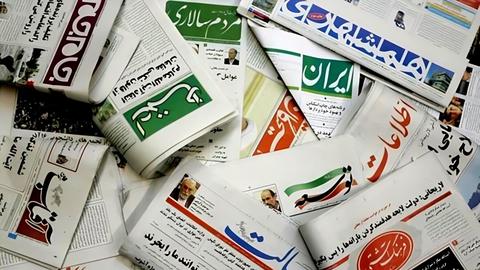
This is a summary of content from Iranian media, published as is. IranWire does not endorse the material.
Iran's media landscape on June 21, 2025, indicates that the conflict with Israel has entered a new, attritional phase. The dominant narrative has shifted from decisive, wave-like responses to a continuous and defensive confrontation, particularly in the southern regions of the country. The media's focus has significantly moved towards the human and economic costs of the war and intensive diplomatic activities.
While news about air defense activities and civilian casualties (detailed by the Ministry of Health) is prominent, the diplomatic consultations of Iran's Foreign Minister with regional counterparts (Egypt, Saudi Arabia, Qatar), as well as the roles of international actors like Turkey, France, and China, constitute a major part of the news coverage.
Domestically, a dual narrative of efforts to return to normalcy (payment of salaries, reopening of businesses) and ongoing crisis management (extended flight cancellations, uncertain internet status, rising dollar and gold prices) is evident. Reformist media offer a more complex narrative by providing in-depth analyses from international media and focusing on the human dimensions, while mainstream media emphasize domestic stability and defensive authority.
II. Introduction
This report analyzes the public discourse and strategic narratives in Iran on June 21, 2025, the fourth day of the military conflict with Israel. After the initial waves of retaliatory attacks, the media space has entered a phase of analyzing consequences and managing a prolonged conflict. This analysis, by examining the content of prominent Telegram channels including Entekhab, Shargh, Ham-Mihan, and Arman-e Melli, seeks to uncover the main narratives in three areas: the continuation of the military conflict with a focus on defense and limited engagements, diplomatic efforts to contain the crisis, and the socio-economic impacts of the war on the daily lives of the Iranian people. This report demonstrates how the official narrative is evolving from "deterrent power" to "continuous defense" and "national resilience," and how media with different leanings frame these developments for their audiences.
III. The Dominant Narrative: War of Attrition and Active Diplomacy Military Actions: From Offense to Continuous Defense
Unlike the early days, which focused on offensive missile strikes, on June 21, the military narrative is more centered on defensive actions and localized engagements. The main news revolves around the activity of air defense systems in the south of the country. For example, the channel "Entekhab," citing Fars News, reports: "Fars says air defense is active in Ahvaz and Mahshahr".
This news, alongside other reports of "plumes of smoke in Mahshahr" and the interception of hostile targets, indicates that the battlefield has shifted from a decisive response to a continuous and attritional conflict. At the same time, Iran's technological prowess continues to be highlighted, as Al-Mayadeen reports: "We are witnessing new Iranian tactics in the use of precision missiles and advanced drones" .
Alongside this, the internal security dimension of the war is emphasized by the head of the judiciary's statement, promising: "The case of elements linked to the Zionist regime's aggression will be dealt with urgently and with severe punishment, and not the slightest leniency or compromise will be made in this matter". This indicates a strategic shift from solely external deterrence to also controlling and settling scores with internal actors.
Human and Infrastructural Costs: A New Focus of Attention
One of the most striking developments in this day's news coverage is the special focus on human casualties and civilian damage. The statistics provided by the Ministry of Health spokesperson are widely covered by all media outlets. "Entekhab" channel reports: "As a result of Israel's attacks until this morning, 3,056 people have been injured... 54 of the martyrs are women and children. Most of the martyrs and injured were civilians".
These precise statistics transform the war from a mere military confrontation into a human tragedy. Furthermore, the systematic targeting of civilian infrastructure is highlighted. According to the Deputy Health Minister: "Three hospitals were attacked, and we were forced to completely evacuate one of them in Kermanshah". News about the martyrdom of young athletes like "Helena Gholami, a teenage karateka from Lorestan" is also published to personalize the casualties and evoke public emotion. This media approach, while documenting Israel's alleged war crimes, seeks to gain global sympathy and strengthen domestic cohesion around Iran's victimhood.
Diplomacy and International Actors: Efforts to Contain the Crisis
Simultaneously with the clashes, an intensive diplomatic marathon is underway, which is the focus of media attention. The meetings of Foreign Minister Abbas Araghchi on the sidelines of the Organization of Islamic Cooperation summit in Istanbul are covered in detail. These meetings include talks with counterparts from key regional countries such as Egypt, Saudi Arabia, and Qatar, indicating Iran's effort to build a regional diplomatic front.The role of international actors is also closely monitored. Recep Tayyip Erdoğan, the President of Turkey, is portrayed as a mediator and a critic of Israel, who believes: "The Netanyahu government wanted to stop the nuclear negotiations by attacking Iran" .
Emmanuel Macron, the President of France, is also presented as an active force for de-escalation, having agreed with Iran's president to "accelerate negotiations between European countries and Iran on the nuclear program". This extensive coverage shows that Iran does not see itself as an isolated actor and is actively using diplomatic tools to manage the crisis and end the war.
IV. Iran's Domestic Discourse and Social Implications Economic Situation and the Return to Normalcy
On the domestic front, a contradictory and dual narrative prevails. On the one hand, there is an effort to present an image of stability and a return to normal conditions. News such as "June salaries of government employees have been paid" and a CNN report stating that "life in Tehran is slowly returning to normal" are published in this vein.On the other hand, there is clear evidence of economic turmoil and an ongoing crisis. The skyrocketing prices of gold and currency, announced after a week of silence, show the deep impact of the war on the economy. "Entekhab" channel reports: "One gram of 18-karat gold is 7,350,000 tomans" and "The price of the dollar in the open market is 92,000 tomans" .
This duality indicates that the government is trying to maintain public trust by projecting stability, while economic realities pose a serious challenge to this narrative.
Internal Security and Crisis Management
Managing the crises arising from the war is a significant part of the domestic discourse. The continuation of disruptions in daily life is evident. The "extension of the cancellation of domestic and international flights until 2 PM tomorrow, Sunday"shows that the security situation has not yet returned to normal. The internet situation also remains unclear, with conflicting reports being published; an informed source in the Ministry of Communications strongly denies the news of full international internet connection.Meanwhile, security measures to counter internal threats are being pursued seriously. The news of the "discovery and neutralization of a bomb in Khorramabad; an agent affiliated with Israel was arrested", indicates the vigilance of security institutions against the "fifth column." This news, along with warnings such as not dealing with fake meter readers, is an attempt to increase public awareness and involve people in maintaining the country's security.
V. Cross-Publication Analysis Mainstream Media (Entekhab, Arman-e Melli)
These media outlets mainly focus on official news, domestic stability, and defensive power. "Entekhab," as a news agency, covers a wide range of breaking news from domestic and foreign sources, but its priority is with official government, military, and judicial statements. "Arman-e Melli" also seeks to reinforce the narrative of stability and national resilience by extensively covering rallies and news related to economic and security management. These channels engage less in deep analyses from international sources or structural critiques and are more reflective of the official state viewpoint.
Reformist/Analytical Media (Ham-Mihan, Shargh, Etemad)
This category of media, while covering the main war news, adds an analytical and critical layer to it. They extensively republish and analyze reports from reputable global media such as The Guardian, Al-Monitor, and The Washington Post to provide a multifaceted picture of international perspectives. Their focus on the human dimensions of the war (such as the "National Trauma" article in Shargh) and its diplomatic consequences is much greater. For instance, analytical notes on Trump's hesitations or the role of domestic and foreign political figures are characteristic of these media. They try to provide a space for a deeper conversation about the roots and consequences of the crisis, not just reflecting official news.
VI. Conclusion
The Iranian media landscape on June 21, 2025, reflects a country entering a war of attrition, with dimensions extending beyond a purely military confrontation. The narrative has shifted from a display of offensive power to an emphasis on continuous defense, highlighting human and economic costs, and pursuing active diplomacy simultaneously.
While military authority is maintained by showcasing air defense activities, the main focus has shifted to managing the consequences of the war in the diplomatic, economic, and social arenas.Domestically, there is a clear tension between the narrative of "returning to normal life" and the realities of an "ongoing crisis." On the international level, Iran portrays itself not as an isolated actor but as an active participant in a multilateral diplomatic scene, engaging with regional and global powers to contain the war.
The differing approaches of mainstream and reformist media are also more evident on this day; the former emphasizes maintaining stability and national morale, while the latter seeks to provide a deeper and more multi-dimensional analysis of the crisis. Overall, Iran is adapting to a long-term conflict where victory is defined not just on the battlefield, but also in the arenas of the economy, diplomacy, and social resilience.
Interested in writing for IranWire?
Share your stories.


comments